RSS

New Price: 1611 Manning Ave., Port Coquitlam, Birchland Manor


Excellent potential opportunity to build a single family home with coach house. Rezoning under way with the City. Currently zoned RD (duplex) with proposal already under review to rezone to RS4. 3rd Reading at the City has been issued. Desirable central location, close to transit, shops, Lougheed Hwy, schools and much more. Features: 35'8122', 4021sqft level lot with lane access and already cleared. Act Now!


Click here for more...

Read

New Price: 1607 Manning Ave., Port Coquitlam, Birchland Manor


Development Permit issued! Plans available. Excellent opportunity for all builders or someone looking to build a custom 1/2 duplex. Desirable central location, close to transit, shops, Lougheed Hwy, schools and much more. Features: 45' * 122', 5410sqft level corner lot with lane access and already cleared. Zoned for approximately 4300sqft 2 storey w/basement duplex (approximately 2150sqft per side) with detached garage. Act now!


Click here for more...

Read

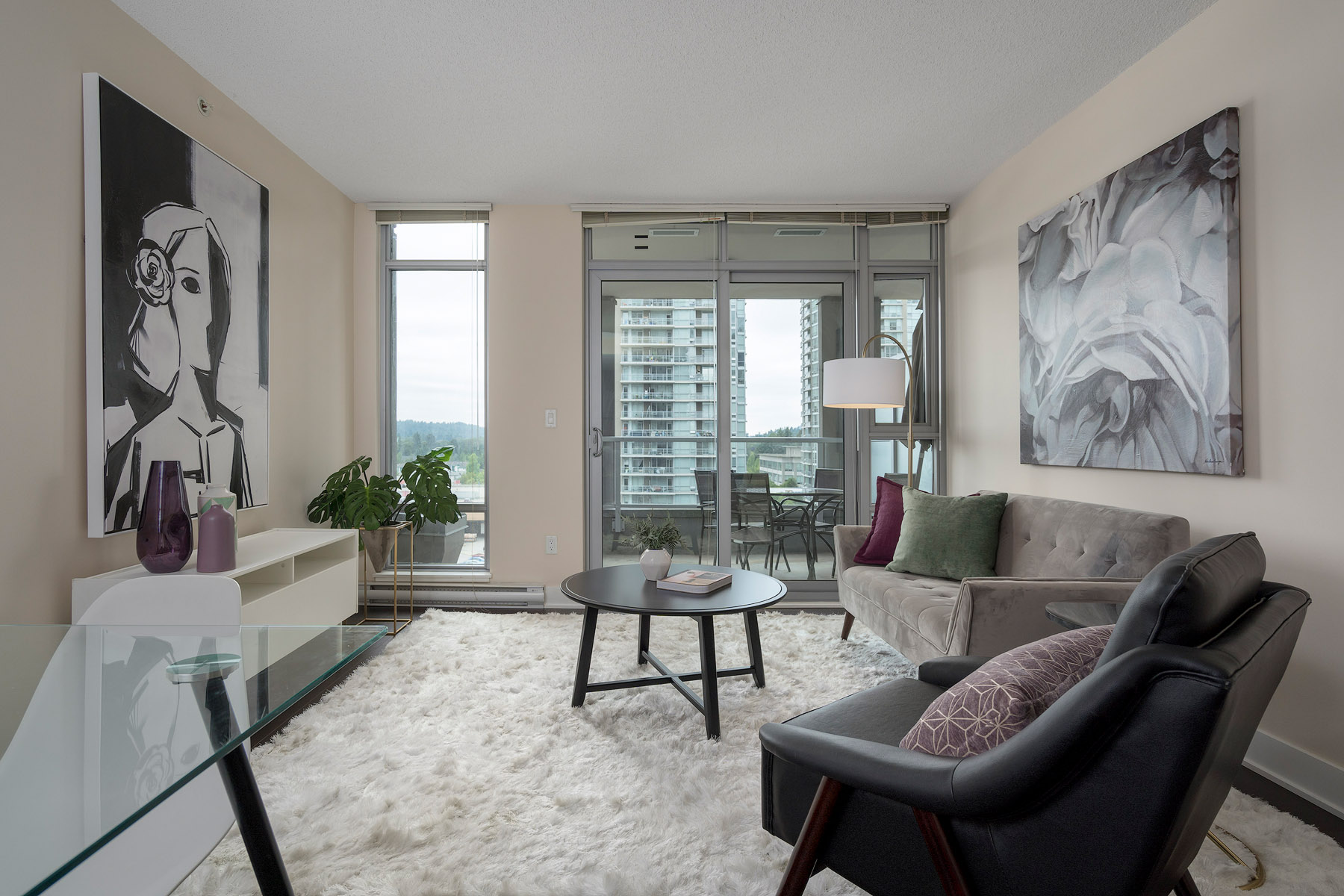
Just Sold: 504 160 Shoreline Circle., Port Moody, College Park

Stunning Water & Mountain Views

Spacious Layout

Rentals Allowed

Price at $618,800


Click here for more...


Come for the size, stay for the AMAZING Water and Mountain views! Nothing to do, just move-in. This 1179sqft., 2bed & den, 2bath top-floor home offers the feeling of a house & not a condo with an open functional layout and excellent room separation. Enjoy the views and BBQ's from a massive152sqft balcony. Features: laminate floors, SS appliances, welcoming entrance, plenty of cupboard & counter space, in-suite storage, well-sized den, laundry room & an abundance of light. The spacious master offers room for king size bed, pass through closets & 4pc ensuite. The large 2nd bed has a view too & good closet space. Rental & pet friendly, parking & locker. Centrally located to: schools, parks, Rocky Point, Skytrain, Brewers Row & all sorts of amenities. Act Now! Call today. 

Read

The British Columbia Real Estate Association (BCREA) reports that a total of 8,221 residential unit sales were recorded by the Multiple Listing Service® (MLS®) in May, a decline of 7 per cent from the same month last year. The average MLS® residential price in the province was $707,829, a decline of 4.3 per cent from May 2018. Total sales dollar volume was $5.8 billion, an 11 per cent decline from the same month last year.


“BC home sales increased 9 per cent in May compared to April, on a seasonally adjusted basis,” said BCREA Chief Economist Cameron Muir. “However, consumers continue to struggle with the negative shock to affordability that stringent mortgage lending policies have created.”

Total MLS® residential active listings were up 23.2 per cent to 41,519 units compared to the same month last year. However, total active listings were down 2 per cent from April, on a seasonally adjusted basis, the first monthly decline since the B20 Stress test was introduced in January 2018.

Year-to-date, BC residential sales dollar volume was down 25.1 per cent to $19.8 billion, compared with the same period in 2018. Residential unit sales decreased 20.2 per cent to 28,711 units, while the average MLS® residential price was down 6.2 per cent to $688,339.


Click here for more...


Proviede by: BCREA


Read

Canadian Housing Starts Trend Decreased in May

The trend in housing starts was 201,983 units in May 2019, compared to 205,717 units in April 2019, according to Canada Mortgage and Housing Corporation (CMHC). This trend measure is a six-month moving average of the monthly seasonally adjusted annual rates (SAAR) of housing starts.


"The national trend in housing starts decreased in May as a result of continuing decline in the trend for single starts as well as a decline in the trend of multi-unit starts that follows gains in this segment in recent months, in urban areas," said Bob Dugan, CMHC's chief economist. "The decrease in the trend of multi-unit starts reflects a decline in the SAAR level of multi-unit activity in May from the unusually elevated level registered in April, which leaves multi-unit SAAR starts closer to its 10-year average."

Monthly Highlights

Vancouver

Vancouver Census Metropolitan Area (CMA) housing starts saw a strong increase in May, with multi-family construction accounting for 90% of total starts for the month. Two thirds of the new units were located in Burnaby, Surrey, and Coquitlam, which together saw a number of condominium and rental apartment projects get underway. So far this year, total housing starts are 10% higher than they were in the same period in 2018 as developers and municipalities move to meet demand from the region’s growing population.

Kelowna

Housing starts in the Kelowna CMA declined in May, relative to the same month last year, continuing the downward trend seen in the previous three months. Overall, housing starts were down approximately 44% in the first 5 months of 2019, relative to the same period last year. This downward trend comes on the heels of a slower pace of population growth allowing the existing home market to return to balance conditions.

Calgary

Housing starts trended lower in May after a slight up-tick the month prior. New construction activity in the market remains relatively low as builders continue to adjust to sustained levels of elevated inventory and soft demand.

Edmonton

Housing starts trended lower for all units types except semi-detached which experienced a slight increase in May. The slowdown in starts continued to reflect the amount of unsold inventory on the market, particularly among single-detached units.

Brantford

Overall starts trended down in Brantford due to lower trending single-detached and row starts. However, despite the slowdown, row starts remain at a higher than usual level. New single detached home prices continue to rise, making new rows increasingly appealing to buyers who are looking to purchase an affordable low-rise home.

St. Catharines-Niagara

Total housing starts in the St. Catharines-Niagara CMA trended up to reach a near 30-year high in May. The townhomes sector was a clear leader, where the pace of new construction has accelerated the most, accounting for 40% of total new home construction trend this month. Price weary buyers from more expensive nearby communities continue to fuel demand for new homes in St. Catharines-Niagara.

Toronto

Total housing starts trended lower during May in the Toronto CMA with declines being recorded across all types of homes. High homeownership costs continue to weigh on the demand for single-detached and row houses thus resulting in fewer low-rise home starts. Strong pre-construction sales of condominium apartment units over the past two years will continue to translate into starts over time at a varied pace, despite their starts trending lower in May.

Ottawa

Housing starts trended slightly higher in May because of higher row starts. Year-to-date actual starts are up 14% relative to the same period last year due mainly to a rise in condominium apartment starts while single-detached homes declined. Rising ownership costs are shifting demand toward relatively more affordable dwellings and tight resale market conditions are encouraging builders to increase supply of condominium apartment units.

Gatineau

From January to May, residential construction in the Gatineau area reached a five-decade record high. This strong increase was attributable mainly to the rise in rental housing starts in the Plateau neighbourhood. The aging of the population and the low vacancy rate have continued to stimulate starts of this type in the Gatineau area.

Montréal

Total housing starts in the Montréal area in the first five months of this year increased compared to the same period last year. This gain was solely attributable to rental housing construction, as condominium and single-family home starts recorded decreases. The low vacancy rates on the conventional rental market and the greater proportion of young households now opting for rental housing have kept stimulating rental housing starts. Seniors’ rental apartment construction has also posted strong growth since the beginning of the year.

Halifax

Residential construction in Halifax continues to trend upwards as the total number of housing starts year-to-date increased by 48% compared to the same period last year. While the apartment segment has been dominating the growth in construction so far this year, in May, single-detached starts recorded a strong uptick, expanding by 69% year-over-year. As sales remain elevated in relation to the number of new listings, demand for additional supply is supporting the new home construction market.

Prince Edward Island (PEI)

Total housing starts in PEI were 60% higher in May driven primarily by higher apartment starts in response to the record low vacancy rate. The PEI economy continues to outperform the other Atlantic provinces, driven primarily by increased capital project spending as well as strong population, income and employment growth.


CMHC uses the trend measure as a complement to the monthly SAAR of housing starts to account for considerable swings in monthly estimates and obtain a more complete picture of Canada’s housing market. In some situations, analyzing only SAAR data can be misleading, as they are largely driven by the multi-unit segment of the market which can vary significantly from one month to the next.


The standalone monthly SAAR of housing starts for all areas in Canada was 202,337 units in May, down 13.3% from 233,410 units in April. The SAAR of urban starts decreased by 14.4% in May to 186,946 units. Multiple urban starts decreased by 18.5% to 141,851 units in May while single-detached urban starts increased by 1.8% to 45,095 units.


Rural starts were estimated at a seasonally adjusted annual rate of 15,391 units.


Click here for more...


Provided by: CMHC

Read

Last week’s market reports from real estate boards including those in Vancouver and Toronto show that there is recovery underway with even the tough market conditions in Vancouver suggesting a bottoming-out.


This is unlikely to end calls for the mortgage stress tests to be altered or scrapped, says RBC Economics’ senior economist Robert Hogue, but it should “quiet down critics fearing a market collapse.”


In his latest assessment of the Canadian housing market, Hogue says the rebound for Toronto sales in May (resales up 19% year-over-year) says more about weakness a year ago than market momentum, with seasonally adjusted figures pointing to stabilization rather than a surge.


And ‘back-of-the-envelope’ calculations on the slowing of declining resales in Vancouver (-6.9% year-over-year in May compared to -30% in April) show that resales increased by more than 25% month-to-month in May on a seasonally-adjusted basis.


“This is the strongest sign yet that the market isn’t spiraling out of control. In fact, we believe it indicates that a bottom has been reached,” writes Hogue.


The report also notes several other Canadian housing markets as showing encouraging signs.


May resales increased year-over-year in Victoria, Calgary and Ottawa—all implying moderate increases between April and May. Despite Regina posting a sizable drop, this followed a strong pick-up in April.


Provided by: Steve Randall for the REP


Read

'Pretty cheap money': Canadian mortgage rates falling to their lowest level in 2 years

Fixed and variable loans have gotten cheaper because costs for lenders are down too

Spring is typically a busy time for home sales, so lenders are competing fiercely right now for new business — and that's adding up to record low rates for borrowers. (Ty Wright/Bloomberg)


House prices may be as high as ever in many parts of the country, but Canadian homebuyers are being offered some of the lowest mortgage rates seen in years as lenders battle to drum up new business.


Rates on a standard five-year fixed-rate mortgage have fallen to their lowest level in two years, according to rate comparison website, Ratehub.ca. 


Borrowers just about everywhere across the country can take their pick of offerings well below three per cent at the moment, says James Laird, the site's co-founder and president of mortgage brokerage, CanWise Financial.


That's partly for seasonal reasons, he says, in that the spring months are typically the best ones for home buying, as families try to get moved and settled before summer vacations and then the new school year sets in.


"Promotions are April, May and June … when all mortgage companies try to make sure they are on track to hit their annual targets," Laird said in an interview. "Anyone who's behind at this point would be aggressive with the margins they're willing to fund mortgages at right now."


At the moment, Laird says he's seeing five-year fixed rates as low as 2.64 per cent for certain buyers, and even higher-risk borrowers can easily find a loan for 2.89 per cent. That's the lowest range since the summer of 2017, he says, and a big reason why is the bond market.


Unlike variable rate loans which take their cues from the Bank of Canada's benchmark rate, lenders finance fixed-rate loans based on the rates they can get in the bond market. Essentially, they'll borrow money themselves at one rate, loan it out to a borrower at a higher rate and make money on that spread.


So current rock-bottom interest rates on fixed loans are no coincidence, considering the yield on a five-year Government of Canada bond dipped below 1.3 per cent this month. If a lender can borrow funds for as little as 1.3 per cent then turn around and make money by loaning it out for twice that rate, they have every incentive to keep offering those deals.


"The hard cost of funding these loans is going down," Laird said. "And at the same time we are at the tail end of the most competitive market, when lenders fight for [business], so that's when they are willing to thin out their margins a bit to attract volume."

Less popular loans

Variable rate loans are also sliding lower, too.


Most borrowers prefer the peace of mind of fixed rate loans, but lenders can tempt borrowers to variable rate loans with even better rates — even if they're only temporary.


Laird says typically it takes a spread of about a full percentage point to entice most people to make the leap. Which is why those loans are even less popular than usual because that premium has almost completely vanished.

He says the best variable rate loans are about 2.65 per cent at the moment, which is barely better than the fixed rate, for a lot more risk.


Anyone signing up for that loan today is "assuming the Bank of Canada is going to be forced to drop their rate once or twice. That would be the only way to justify taking it," he said. The bank's benchmark rate is 1.75 per cent. 


Trading in investments known as overnight index swaps suggests investors think there's about a 50 per cent chance of a rate cut by the central bank this year — but two would be very unlikely, and never mind any more beyond that.

Lower rates could be good news for those who've already bought, too.

1 in 6 mortgages up for renewal

recent report by National Bank found that a little more than one out of every six mortgages in Canada is up for renewal this year, and as recently as January the bank was calculating that most of them could expect to be paying between 70 and 90 more basis points on their next loan than they were on their current one. (A basis point is 1/100th of a percentage point, so a jump of 70 basis points would be a loan that went from 3 to 3.7 per cent, for example.)

But thanks to the steep slide in mortgage rates since the start of the year, most people with loans up for renewal now have no need to fear a big jump in their rate when the time comes.


"With the recent drop in mortgage rates, those households will be renewing at rates barely above their previous ones," National Bank economist Matthieu Arseneau said.


Laird doesn't see anything on the immediate horizon that could derail the era of lower rates, but he does think the federal election in October is worth paying attention to for how it relates to housing.


Housing policy is bound to come up on the campaign trail, and he expects to hear a lot of talk about changing stress test rules and extending amortization periods in the coming months.


But until that happens, Laird's expectations for the mortgage market can be summed up succinctly: "Pretty cheap money."


Provided by: Pete Evans for CBC News

Read

CLI Points to Stabilizing Commercial Activity in 2019 Q1


The BCREA Commercial Leading Indicator (CLI) rose by 1.3 points to 135.2 in the first quarter of 2019. Compared to this time one year ago, the index is 1.1 per cent higher.


“While economic activity remained tepid at the start of 2019, a rebound in financial markets pushed the CLI higher,” says BCREA Deputy Chief Economist Brendon Ogmundson. “That signals a lower risk environment, but a slowing economy may impact future commercial real estate activity.”


Following several years of robust growth, the BC economy continues to slow in the early part of 2019. The economic activity component of the CLI posted a third consecutive quarterly decline. Employment in key commercial real estate sectors was mixed. The CLI measure of office employment now sits at an all-time high, which signals strong future demand for office space. Volatile financial markets led to recent swings in the underlying CLI index, but the trend remains flat, pointing to stable commercial activity in 2019.


Click here for more...


Provided by: BCREA -   “Copyright British Columbia Real Estate Association. Reprinted with permission.” 

Read

NEW PRICE: 504 160 Shoreline Circle, Port Moody, College Park

Stunning Water & Mountain Views

Spacious Layout

Rentals Allowed

Price at $618,800


Click here for more...


Come for the size, stay for the AMAZING Water and Mountain views! Nothing to do, just move-in. This 1179sqft/2bed & den/2bath top-floor home offers the feeling of a house & not a condo with an open functional layout and excellent room separation. Enjoy the views and BBQ's from a massive 152sqft balcony. Features: laminate floors, SS appliances, welcoming entrance, plenty of cupboard & counter space, in-suite storage, well-sized den, laundry room & an abundance of light. The spacious master offers room for king size bed, pass through closets & 4pc ensuite. The large 2nd bed has a view too & good closet space. Rental & pet friendly, parking & locker. Centrally located to: schools, parks, Rocky Point, Skytrain, Brewers Row & all sorts of amenities. Act Now! Call today. OPEN HOUSE Sat. June 8, 2 to 4 pm.

Read

May sees modest increase in home sales while housing supply reaches five-year high

Monthly *Metro Vancouver1 home sales eclipsed 2,000 for the first time this year in May, although home buyer demand remains below historical averages.

The Real Estate Board of Greater Vancouver (REBGV) reports that residential home sales in the region totalled 2,638 in May 2019, a 6.9 per cent decrease from the 2,833 sales recorded in May 2018, and a 44.2 per cent increase from the 1,829 homes sold in April 2019.

Last month’s sales were 22.9 per cent below the 10-year May sales average and was the lowest total for the month since 2000.

“High home prices and mortgage qualification issues caused by the federal government’s B20 stress test remain significant factors behind the reduced demand that the market is experiencing today,” Ashley Smith, REBGV president said.

There were 5,861 detached, attached and apartment properties newly listed for sale on the Multiple Listing Service® (MLS®) in Metro Vancouver last month. This represents an 8.1 per cent decrease compared to the 6,375 homes listed in May 2018 and a 2.1 per cent increase compared to April 2019 when 5,742 homes were listed.

The total number of homes currently listed for sale on the MLS® system in Metro Vancouver is 14,685, a 30 per cent increase compared to May 2018 (11,292) and a 2.3 per cent increase compared to April 2019 (14,357). This is the highest number of homes listed for sale since September 2014 (14,832).

“Whether you’re a buyer looking to make an offer or a seller looking to list your home, getting your pricing right is the key in today’s market,” Smith said. “To be competitive, it’s important to work with your local REALTOR® to assess and understand the latest trends in your neighbourhood and property type of choice.”

For all property types, the sales-to-active listings ratio for May 2019 is 18 per cent. By property type, the ratio is 14.2 per cent for detached homes, 20 per cent for townhomes, and 21.2 per cent for apartments.

Generally, analysts say downward pressure on home prices occurs when the ratio dips below 12 per cent for a sustained period, while home prices often experience upward pressure when it surpasses 20 per cent over several months.

*The MLS® Home Price Index2 composite benchmark price for all residential homes in Metro Vancouver is currently $1,006,400. This represents an 8.9 per cent decrease over May 2018, a 3.4 per cent decrease over the past six months, and a 0.4 per cent decrease compared to April 2019.

Sales of detached homes in May 2019 reached 913, a 1.4 per cent decrease from the 926 detached sales recorded in May 2018. The benchmark price for a detached home in the region is $1,421,900. This represents an 11.5 per cent decrease from May 2018, a 5.4 per cent decrease over the past six months, and a 0.5 per cent decrease compared to April 2019.

Sales of apartment homes reached 1,246 in May 2019, a 12.9 per cent decrease compared to the 1,431 sales in May 2018. The benchmark price of an apartment property is $664,200. This represents a 7.3 per cent decrease from May 2018, a two per cent decrease over the past six months, and a 0.5 per cent decrease compared to April 2019.

Attached home sales in May 2019 totalled 479, a 0.6 per cent increase compared to the 476 sales in May 2018. The benchmark price of an attached unit is $779,400. This represents a 7.6 per cent decrease from May 2018, a 3.5 per cent decrease over the past six months, and a 0.6 per cent increase compared to April 2019.

Click here for more...


Provided by: REBGV


Read


The Bank of Canada today maintained its target for the overnight rate at 1 ¾ per cent.The Bank Rate is correspondingly 2 per cent and the deposit rate is 1 ½ per cent.


Recent Canadian economic data are in line with the projections in the Bank’s April Monetary Policy Report (MPR), with accumulating evidence that the slowdown in late 2018 and early 2019 is being followed by a pickup starting in the second quarter. The oil sector is beginning to recover as production increases and prices remain above recent lows. Meanwhile, housing market indicators point to a more stable national market, albeit with continued weakness in some regions.


Continued strong job growth suggests that businesses see the weakness in the past two quarters as temporary. Recent data support a pickup in both consumer spending and exports in the second quarter, and it appears that overall growth in business investment has firmed. That said, inventories rose sharply in the first quarter, which may dampen production growth in coming months.


The global economy is also evolving largely as expected since April, although the recent escalation of trade conflicts is heightening uncertainty about economic prospects. In addition, trade restrictions introduced by China are having direct effects on Canadian exports. In contrast, the removal of steel and aluminum tariffs and increasing prospects for the ratification of CUSMA will have positive implications for Canadian exports and investment.


Inflation has evolved in line with the Bank’s April projection. The Bank expects CPI inflation to remain around the 2 per cent target in the coming months. Core inflation measures all remain close to 2 per cent.

Overall, recent data have reinforced Governing Council’s view that the slowdown in late 2018 and early 2019 was temporary, although global trade risks have increased. In this context, the degree of accommodation being provided by the current policy interest rate remains appropriate. In taking future policy decisions, Governing Council will remain data dependent and especially attentive to developments in household spending, oil markets and the global trade environment.


The next scheduled date for announcing the overnight rate target is July 10, 2019. The next full update of the Bank’s outlook for the economy and inflation, including risks to the projection, will be published in the MPR at the same time.


Provided by: Bank Of Canada

Read

Burnaby city council has given TransLink the go-ahead to keep planning for a gondola to SFU Burnaby Mountain campus


Burnaby council advances SFU gondola despite concerns.


Councillors want Forest Grove residents consulted before TransLink approves route.


Burnaby city council has given TransLink the go-ahead to keep planning for a gondola to Simon Fraser University’s Burnaby Mountain campus. The city’s mayor and councillors voted unaminously Monday to support, in principle, TransLink’s plan to link the school with a SkyTrain station. 


TransLink carries 25,000 people to SFU’s Burnaby Mountain campus every day, making it the biggest transit destination in the city without a SkyTrain station, according to a city staff report. Demand is only expected to grow as enrollment increases and the UniverCity community grows. 


A gondola could also better serve the school in winter, the report says. 


“The combination of snow and steep grades can make provision of (bus) service to Burnaby Mountain difficult in the winter months,” the report states. “Service is interrupted or significantly delayed on about ten days annually, sometimes necessitating the closure of the campus so that students and staff can evacuate before that day's transit service is cancelled.”


A gondola could, theoretically, serve the mountain faster, more frequently and more reliably than buses, city staff wrote. 


TransLink’s 10-Year Vision from 2014 did not include plans to build the gondola but did support studying the idea further.


Despite all voting to advance the planning process, several council members expressed concerns about the impacts the project could have on Forest Grove residents. 


A route proposed by TransLink would take the gondola directly over some homes in a straight line from the Production Way-University station to the SFU bus loop. Several councillors said this could become a nuisance and privacy violation for residents.  


“If that's the preferred route that TransLink wants to push through, I won't stand for it and I know the residents of Forest Grove won't stand for it,” Coun. Joe Keithley said. “Those people there, they're already living with the (Trans Mountain) pipeline, so to add this on top of it would be a crushing blow.”


TransLink has also proposed a longer route that would leave Production Way-University before making a 90-degree turn midway and continue to the campus. The route would avoid passing directly over homes but would pass close to more houses than the first option, the city report says.


Burnaby has proposed a third option: run the gondola from the Lake City Way station, around the Trans Mountain tank farm and then to the SFU bus loop. This option “would appear to offer an alternative with lower impacts to residents, riparian areas and the Burnaby Mountain Conservation Area,” the report states.  

Burnaby’s proposed route would be 4.3 kilometres long – 59 per cent longer than the most direct proposed route – but Coun. Sav Dhaliwal said the added cost would be worth it.


“If we think the project is that good, that it's going to be a benefit for the next 60 years or a lot more, then we should be willing to spend a lot more money,” he said.


The veteran councillor, who also serves as Metro Vancouver’s board chair, said he’s not convinced the project’s estimated $200 million price tag will be worth the purported benefits. A gondola can never fully replace road access in snowy weather, he said. 


“The roads have to be still clear. If we're not doing it, we need to give some more attention to that so people can get there under any circumstances, under any weather conditions,” he said. “It hardly ever snows here; if it does, it's not exactly the blizzard that other parts of the country (get).”


TransLink is now expected to seek funding from senior levels of government to advance the gondola project plan. 


Provided by: Kelvin Gawley for the Burnaby Now

Read
Reciprocity Logo The data relating to real estate on this website comes in part from the MLS® Reciprocity program of either the Greater Vancouver REALTORS® (GVR), the Fraser Valley Real Estate Board (FVREB) or the Chilliwack and District Real Estate Board (CADREB). Real estate listings held by participating real estate firms are marked with the MLS® logo and detailed information about the listing includes the name of the listing agent. This representation is based in whole or part on data generated by either the GVR, the FVREB or the CADREB which assumes no responsibility for its accuracy. The materials contained on this page may not be reproduced without the express written consent of either the GVR, the FVREB or the CADREB.