RSS

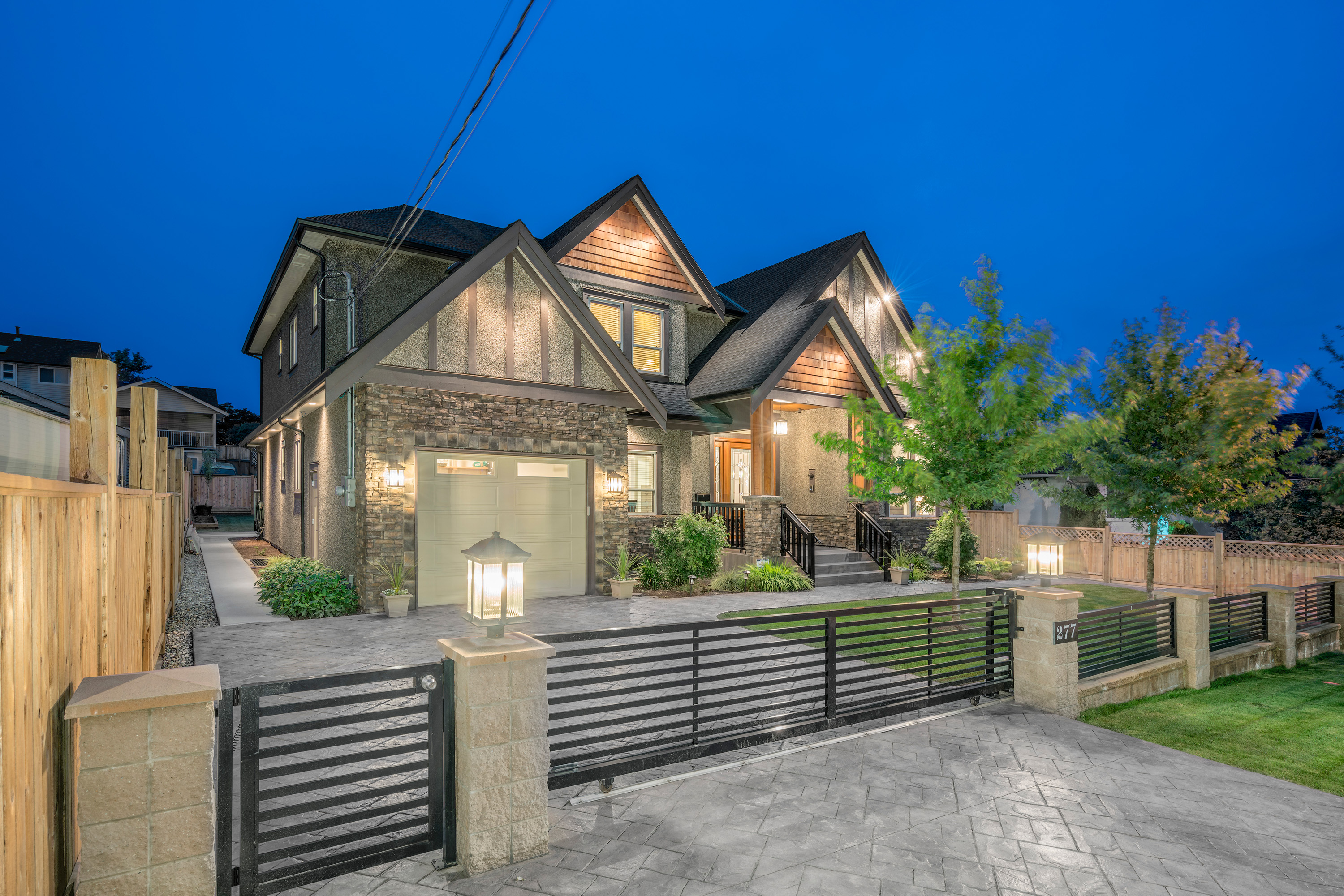
Luxury home sales in two of Canada’s most expensive markets are down from a year, as the high-end real estate market feels the effect of foreign buyers taxes.


TORONTO — Sales of luxury homes in two of Canada’s most expensive cities fell this year, as the high-end real estate market continued to feel the impact of foreign buyers taxes.


Realty brokerage Re/Max says sales of single-detached homes priced from $1 million to $2 million fell 35 per cent from a year ago in both Toronto and Vancouver.


According to the annual report, released Tuesday, sales of single-detached homes in the $2-million-to-$3-million range were down 50 per cent in Toronto and 22 per cent in Vancouver.


Meanwhile, homes that were sold for more than $3 million dropped 44 per cent in Toronto and 45 per cent in Vancouver.


Re/Max says homebuyers have been grappling with the introduction of foreign buyers taxes in Ontario and B.C., along with increased property transfer taxes and school taxes on B.C. homes over $3 million.


“All the new rules that the government implemented, along with the foreign buyers tax and the new lending regulations, it all just put a crunch on the most expensive part of the market,” said Christopher Alexander, executive vice-president and regional director of Re/Max Integra’s Ontario-Atlantic business.


He says luxury homeowners may have also been hesitant to list this year amid signs that the country’s housing market may be cooling, choosing instead to “wait it out.”


Although luxury home sales are weakening, sales in the low-end of the luxury condo market saw increases driven mainly by millennials who are using their inheritances and baby boomers looking to downsize, the report said.

Alexander says condos appeal to baby boomers because they can get more value for their money, especially in the major cities.


“Most of them have put all their kids in school. They don’t need so much space anymore. Their single-detached home is worth a fortune and now they can buy a really nice luxury condo that is not as big in a really great urban area where they have access to a more urbanized lifestyle, more action,” he said.


“Luxury is not just about price. A lot of it has to do with pedigree. If you buy with a million in Toronto or Vancouver, it doesn’t get you a luxury home but if you get a suite in the Four Seasons or the Shangri-La or the Ritz-Carlton. You’re going to get a small condo in a luxury building with all the luxury amenities. You’ve got that pedigree piece that is appealing to the higher end of the market.”


The report says condo sales in the $1-million-to-$2-million range were up two per cent year over year in Toronto and six per cent in Vancouver. Calgary saw their condo sales in this price range jump by three per cent, while Victoria sales climbed 19 per cent.


The most expensive condominium sold in Toronto in 2018 so far was priced at $11.5 million, topping the $8 million that was paid for the most expensive condo sold in 2017. The priciest condo sold in Vancouver so far this year was $11.7 million, up 34 per cent from the top price of $8.7 million paid last year.


Provided by: The Canadian Press

Read

The British Columbia Real Estate Association welcomes the Government of British Columbia’s inclusion of exemptions from the speculation and vacancy tax proposed as Bill 45 today, Tuesday, October 16, 2018. Some of the exemptions directly address concerns BCREA brought to the Province’s attention through its advocacy work.

The Bill allows for exemptions for British Columbians going through traumatic life events such as illness and divorces or separations. It also allows for exemptions for owners of properties that are being developed or undergoing renovations.

It also exempts strata units from a vacancy tax for 2018 and 2019, where strata restrictions prohibit rentals. Further clarity is needed on this exemption and other implications.

BCREA, its 11 regional real estate boards and the 23,000 REALTORS® they represent look forward to providing the Province with REALTOR® insight on the implementation of Bill 45 to ensure that the best interests of BC homeowners are served.

Read the Province’s news release here. Learn more about the speculation and vacancy tax here.


Provided by: BCREA

Read

My brother and I used Hafez off a recommendation from my Dad's co-worker to buy our first home! And he has been excellent at helping us navigate this complicated purchase. As well as great advice when he got a bad feeling to make sure we found the place that is right for us. Now we haven't got the keys just yet but it has been an easy and smooth process and I'm sure the final stages will be as well. He is quick to respond to any questions and even quicker to arrange showings that worked around our busy work schedule so we didn't miss out! I don't have much experience in the home buying process, since this is my first, but I would definitely recommend using him as he the best!


C.M. & K.M.

Read

Canadian home sales activity edges lower in September


Statistics released today by The Canadian Real Estate Association (CREA) show national home sales edged down slightly between August and September 2018.


Highlights:

  • National home sales edged back 0.4% from August to September.
  • Actual (not seasonally adjusted) activity was down by 8.9% from one year ago.
  • The number of newly listed homes rose by 3% from August to September.
  • The MLS® Home Price Index (HPI) was up 2.3% year-over-year (y-o-y) in September.
  • The national average sale price edged up a slight 0.2% y-o-y in September.

National home sales via Canadian MLS® Systems eased by 0.4% in September 2018, marking the first decline since April. While sales activity is still somewhat stronger compared to the first half of this year, it remains well below most other months since 2014. (Chart A)


Sales declined from August to September in slightly more than half of all local markets, led by Vancouver Island and Edmonton, along with several markets in Ontario’s Greater Golden Horseshoe (GGH) Region. Activity declines in these markets were offset by monthly gains in the Fraser Valley and Montreal.


Actual (not seasonally adjusted) activity was down 8.9% compared to September 2017.


About 70% of local markets were down on a y-o-y basis, led primarily by declines in major urban centres in British Columbia, along with Calgary, Edmonton and Winnipeg.


“The balance between the number of home buyers and suitable homes varies depending on location, housing type and price range,” said CREA President Barb Sukkau. “Differences in market balance will likely come into sharper focus as interest rates rise and cause this year’s new mortgage stress-test to become even more restrictive. A professional REALTOR® is your best source for information and guidance in negotiating a purchase or sale of a home during these changing times,” said Sukkau.


The number of newly listed homes rose 3% between August and September, led by the Lower Mainland and the Greater Toronto Area (GTA). More than half of all local markets posted a monthly increase in new listings, which was offset by declines in excess of 3% in more than half of the remaining local markets.


“Sales activity may get all the press but it’s the balance between that and the number of homes for sale that sets the tone for pricing environment,” said Gregory Klump, CREA’s Chief Economist. “In markets with an abundant supply of homes and slower sales activity, buyers have the upper hand when it comes to negotiations over price. However, in places where buyers are keen to make a purchase but there’s a shortage of homes for sale, sellers are in the driver’s seat when it comes to price. It will be interesting to see how supply and demand respond to rising interest rates amid this year’s new mortgage stress-test.” 


With sales down slightly and new listings up, the national sales-to-new listings ratio eased to 54.4% in September compared to 56.2% in July and August. The long-term average for this measure of market balance is 53.4%.


Considering the degree and duration to which market balance readings are above or below their long-term average is a way of gauging whether local housing market conditions favour buyers or sellers. As a rule of thumb, measures of market balance that are within one standard deviation of their long-term average are generally consistent with balanced market conditions.


Based on a comparison of the sales-to-new listings ratio with the long-term average, about three-quarters of all local markets were in balanced market territory in September 2018.


The number of months of inventory is another important measure for the balance between housing supply and demand. It represents how long it would take to liquidate current inventories at the current rate of sales activity.


There were 5.3 months of inventory on a national basis at the end of August 2018. While this is in line with the measure’s long-term average nationally, the number of months of inventory is well above its long-term average in all Prairie provinces and in Newfoundland & Labrador.


The Aggregate Composite MLS® Home Price Index (MLS® HPI) was up 2.3% y-o-y in September 2018. The increase was in line with those posted in each of the two previous months. (Chart B)


Apartment units posted the largest y-o-y price gains in September (+8.4%), followed by townhouse/row units (+4.5%). Meanwhile, one-storey and two-storey single family home prices were little changed on a y-o-y basis in September (-0.3% and -0.3% respectively).


Trends continue to vary widely among the 17 housing markets tracked by the MLS® HPI. In British Columbia, home price gains are diminishing on a y-o-y basis in the Lower Mainland (Greater Vancouver (GVA): +2.2%; Fraser Valley: +8.5%). Meanwhile, prices in Victoria were up 8.7% y-o-y in September. Elsewhere on Vancouver Island they climbed 13.2%.


Among the housing markets in the Greater Golden Horseshoe region that are tracked by the index, home prices were up from year-ago levels in Guelph (+8%), Hamilton-Burlington (+6.1%), the Niagara Region (+5.9%), the GTA (+2%), and Oakville-Milton (+1.4%). By contrast, home prices slipped lower in Barrie and District (-3.6%).

Across the Prairies, benchmark home prices remained below year-ago levels in Calgary (-2.6%), Edmonton (-2.6%), Regina (-4.7%) and Saskatoon (-1.9%).


Home prices rose by 6.9% y-o-y in Ottawa (led by an 7.9% increase in two-storey single family home prices), by 6.1% in Greater Montreal (led by a 7% increase in townhouse/row unit prices) and by 3.4% in Greater Moncton (led by a 10.3% increase in apartment unit prices). (Table 1)


The MLS® HPI provides the best way of gauging price trends because average price trends are strongly distorted by changes in the mix of sales activity from one month to the next.


The actual (not seasonally adjusted) national average price for homes sold in September 2018 was just under $487,000, little changed (+0.2%) from the same month last year.


The national average price is heavily skewed by sales in the GVA and GTA, two of Canada’s most active and expensive markets. Excluding these two markets from calculations cuts almost $104,000 from the national average price, trimming it to just over $383,000.


PLEASE NOTE: The information contained in this news release combines both major market and national sales information from MLS® Systems from the previous month.


CREA cautions that average price information can be useful in establishing trends over time, but does not indicate actual prices in centres comprised of widely divergent neighbourhoods or account for price differential between geographic areas. Statistical information contained in this report includes all housing types.


MLS® Systems are co-operative marketing systems used only by Canada’s real estate Boards to ensure maximum exposure of properties listed for sale.


The Canadian Real Estate Association (CREA) is one of Canada’s largest single-industry trade associations. CREA works on behalf of more than 125,000 REALTORS® who contribute to the economic and social well-being of communities across Canada. Together they advocate for property owners, buyers and sellers.


Further information can be found at http://crea.ca/statistics.

Read

BC Home Sales Continue at Slower Pace in September

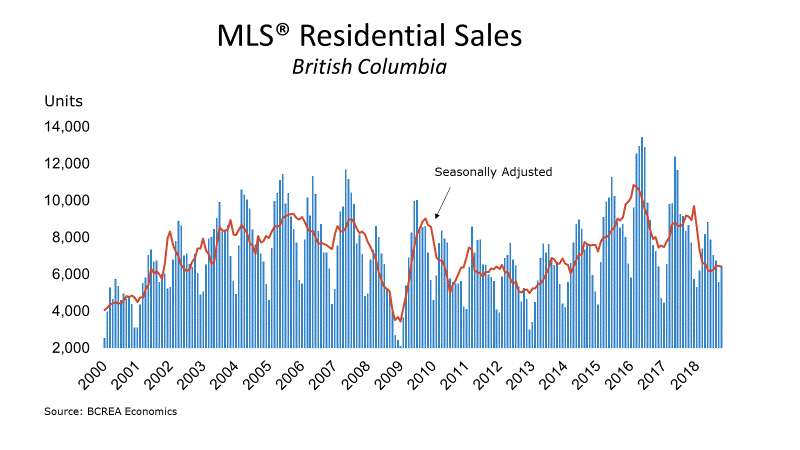
Vancouver, BC – October 11, 2018. The British Columbia Real Estate Association (BCREA) reports that a total of 5,573 residential unit sales were recorded by the Multiple Listing Service® (MLS®) across the province in September, a 33.2 per cent decrease from the same month last year. The average MLS® residential price in BC was $685,749, down 1.1 per cent from September 2017. Total sales dollar volume was $3.8 billion, a 34 per cent decline from September 2017.


“BC home sales continue at a slower pace compared to last year,” said Cameron Muir, BCREA Chief Economist. “The

impact on affordability and purchasing power caused by the mortgage stress test and moderately higher interest rates are negating the effect of the extraordinarily strong performance of BC’s economy over the last five years.”


Year-to-date, BC residential sales dollar volume was down 21.3 per cent to $45 billion, compared with the same period in 2017. Residential unit sales decreased 22.5 per cent to 63,251 units, while the average MLS® residential price was up 1.5 per cent to $716,096.

Read

JUST SOLD: 314 8511 Westminster, Richmond, BC

Excellent Central Location

Investor Friendly Building

Priced at $365,000


Click here for more info...


Top Floor, West Facing. Bright and spacious. Perfect starter home, great for down sizers or excellent investment property. Your search ends here. This 1 bed, 1 bath, 679sqft home features an open floor plan, updated kitchen with new back splash and newer stainless appliances, updated bathroom, insuite laundry & cozy wood F/P. The large master offers plenty of space for furniture & a well sized closet. Benefits: plenty of insuite storage, parking and pet & rental friendly. Location can't be beat: close to shopping, recreation, Kwantlen College & Sky Train Line. Act Now. Call today.

Read

More supply and less demand seen across Metro Vancouver housing market

The supply of homes for sale continued to increase across the Metro Vancouver* housing market in September while home buyer demand remained below typical levels for this time of year.


The Real Estate Board of Greater Vancouver (REBGV) reports that residential property sales in the region totalled 1,595 in September 2018, a 43.5 per cent decrease from the 2,821 sales recorded in September 2017, and a 17.3 per cent decrease compared to August 2018 when 1,929 homes sold.


Last month’s sales were 36.1 per cent below the 10-year September sales average.


“Fewer home sales are allowing listings to accumulate and prices to ease across the Metro Vancouver housing market,” Ashley Smith, REBGV president-elect said. “There’s more selection for home buyers to choose from today. Since spring, home listing totals have risen to levels we haven’t seen in our market in four years.”


There were 5,279 detached, attached and apartment properties newly listed for sale on the Multiple Listing Service® (MLS®) in Metro Vancouver in September 2018. This represents a 1.8 per cent decrease compared to the 5,375 homes listed in September 2017 and a 36 per cent increase compared to August 2018 when 3,881 homes were listed.


The total number of properties currently listed for sale on the MLS® system in Metro Vancouver is 13,084, a 38.2 per cent increase compared to September 2017 (9,466) and a 10.7 per cent increase compared to August 2018 (11,824).


For all property types, the sales-to-active listings ratio for September 2018 is 12.2 per cent. By property type, the ratio is 7.8 per cent for detached homes, 14 per cent for townhomes, and 17.6 per cent for condominiums.


Generally, analysts say that downward pressure on home prices occurs when the ratio dips below the 12 per cent mark for a sustained period, while home prices often experience upward pressure when it surpasses 20 per cent over several months.


“Metro Vancouver’s housing market has changed pace compared to the last few years. Our townhome and apartment markets are sitting in balanced market territory and our detached home market remains in a clear buyers’ market,” Smith said. “It’s important for both home buyers and sellers to work with their Realtor to understand what these trends means to them.”


The MLS® Home Price Index composite benchmark price for all residential properties in Metro Vancouver is currently $1,070,600. This represents a 2.2 per cent increase over September 2017 and a 3.1 per cent decrease over the last three months.


Sales of detached properties in September 2018 reached 508, a 40.4 per cent decrease from the 852 detached sales recorded in September 2017. The benchmark price for detached properties is $1,540,900. This represents a 4.5 per cent decrease from September 2017 and a 3.4 per cent decrease over the last three months.


Sales of apartment properties reached 812 in September 2018, a 44 per cent decrease compared to the 1,451 sales in September 2017. The benchmark price of an apartment property is $687,300. This represents a 7.4 per cent increase from September 2017 and a 3.1 per cent decrease over the last three months.


Attached property sales in September 2018 totalled 275, a 46.9 per cent decrease compared to the 518 sales in September 2017. The benchmark price of an attached unit is $837,600. This represents a 6.4 per cent increase from September 2017 and a two per cent decrease over the last three months.

Click here for complete package...

Read

Just Listed: 404 2328 Oxford St., Vancouver East, Hastings

Top Floor, South Facing

Investor Friendly Building

Priced at $418,000


Click here for more info...


BRAND NEW! Well might as well be. The Mariner, located in the heart of Hastings-Sunrise, centrally located to all sorts of amenities with a walk-score of 86, has been completely upgraded: full envelope replacement, roof, windows, balconies, railings, exterior lighting & update plumbing. All under warranty & recently completed. This is a must see. #404 is a top floor, bright south facing 1 bed & den, 1 bath, 609sqft home with an update bath & engineered flooring. Enjoy BBQs from a massive covered balcony. Bonus: 1 parking, hot water baseboard heat, rental & pet friendly. Act Now! Book your private viewing.

Read

Just Listed: 314 8511 Westminster Hwy., Richmond, Brighouse

Excellent Central Location

Investor Friendly Building

Priced at $365,000


Click here for more info...


Top Floor, West Facing. Bright and spacious. Perfect starter home, great for down sizers or excellent investment property. Your search ends here. This 1 bed, 1 bath, 679sqft home features an open floor plan, updated kitchen with new back splash and newer stainless appliances, updated bathroom, insuite laundry & cozy wood F/P. The large master offers plenty of space for furniture & a well sized closet. Benefits: plenty of insuite storage, parking and pet & rental friendly. Location can't be beat: close to shopping, recreation, Kwantlen College & Sky Train Line. Act Now. Call today.

Read

Canada and the U.S. have announced a tentative new trilateral trade deal with Mexico that includes some key concessions on issues of import to both countries — and also a reworked name: the United States-Mexico-Canada Agreement (USMCA).


"​USMCA will give our workers, farmers, ranchers, and businesses a high-standard trade agreement that will result in freer markets, fairer trade and robust economic growth in our region," Foreign Affairs Minister Chrystia Freeland and U.S. Trade Representative Robert Lighthizer said in a joint statement released late Sunday.


"It will strengthen the middle class, and create good, well-paying jobs and new opportunities for the nearly half billion people who call North America home," the statement said. "We look forward to further deepening our close economic ties when this new agreement enters into force."


After 14 months of intensive and often fractious negotiations between the two countries, Prime Minister Justin Trudeau convened a late-night meeting of cabinet to brief ministers because a deal had been reached only hours before a U.S.-imposed midnight deadline.


'A good day for Canada'

Leaving the meeting about an hour and 15 minutes after it began, Trudeau said only that it was "a good day for Canada" and that he'd have more to say to reporters on Monday.


In a background briefing with reporters, a senior Trump administration official heralded the USMCA as a win for all three countries.


"This is a big win for the U.S., Mexico and for Canada and it fulfils one of the president's most important campaign promises," a senior Trump administration official said. "We think this is a fantastic agreement. It's a great win for the president and a validation of his strategy in the area of international trade."


At the heart of the deal is a trade-off between greater U.S. access to Canada's dairy market, which is heavily protected by a system of supply management, and Canadian demands for the maintenance of a dispute resolution process.


The two sides have agreed to keep Chapter 19, NAFTA's dispute resolution mechanism, intact. That's a major victory for Canadian negotiators who have long sought to keep some sort of process to challenge anti-dumping and countervailing-duty cases — which Canada has deployed in the past over the softwood lumber file.


Chapter 19 preserved word for word

Chapter 19 will be preserved word for word, though it will be renumbered in the new agreement, U.S. officials said Sunday.


Lighthizer has steadfastly opposed this chapter, as he believes it's a violation of U.S. sovereignty to have a multinational panel of arbiters decide on the acceptability of U.S. tariffs.


A Trump administration official deflected Sunday when asked if preserving Chapter 19 was a win for Canada. "From our perspective we think there's really, really great things in this agreement. We're excited about those parts of it," the official said.


(Chapter 11, however, will be phased out between the U.S. and Canada, Trump officials said. This chapter, which outlines the investor-state dispute settlement, allowed corporations to sue governments at special tribunals for interfering in their business.)


​In exchange for some U.S. concessions on a dispute mechanism, Canada is expected to give U.S. farmers greater access to Canada's dairy market by increasing the quota on foreign imports.


Under the current supply management system, Canada imposes tariffs on dairy imports — which can run as high as 300 per cent — that exceed the established quota. Trump has railed against these tariffs as unfair to American farmers, as they are designed to keep foreign products out while privileging Canadian sources.


Dairy concessions could be politically challenging

Some of what Canada has agreed to could be politically challenging for the Liberal government, especially in Quebec, where dairy farmers hold electoral sway in certain ridings.


Under the new NAFTA, the U.S. will have roughly the same access to the Canadian dairy market as what was given up by Trudeau when he signed the Comprehensive and Progressive Agreement for Trans-Pacific Partnership (CPTPP) trade deal with 10 Asia-Pacific countries earlier this year.


Under that agreement, those 10 countries will have market access that equals 3.25 per cent of Canada's annual milk production. The exact percentage extended to U.S. dairy exporters was not immediately clear — but it will be marginally higher than that 3.25 per cent now open to Asian countries.


"We've achieved levels of market access, from the perspective of the U.S., that are a better deal than what the prior administration negotiated in TPP," a Trump administration official said of what former U.S. president Barack Obama squeezed out of the Canadians on the dairy front.


Trump officials say dairy changes major breakthrough

But, perhaps most importantly for dairy producers, Canada has agreed to end what's called class 7 pricing, a milk class created in March 2017 that slashed prices on some Canadian-produced milk ingredients — like protein concentrates, skim milk and whole milk powder — used to make cheese and yogurt. The co-ordinated price cut made the American equivalents uncompetitive.


Trump administration officials pounced on this change Sunday, touting it as a major breakthrough for American farmers, especially in Wisconsin and New York, where dairy farmers are eager to offload some of their product on Canada as they grapple with severe oversupply.


"On the dairy issue, we have a great result for our dairy farmers ... and this was one of the president's key objectives," the Trump administration official said. "Canada has agreed to eliminate the class 7 milk pricing system, which is something that was very problematic."


At the outset of the NAFTA talks, the U.S. demanded Canada dismantle supply management entirely — something that Trudeau has always maintained was a non-starter. Its preservation, save for a few tweaks, will be pitched as a success story by the governing Liberals.


Steel and aluminum imports still an open question

Canada is also expected to sign on to this new NAFTA without any reassurances that the U.S. will lift its so-called "section 232" tariffs on steel and aluminum imports — a coup for the economic nationalists that surround Trump who believe that protectionist measures like these punitive tariffs can help salvage the declining U.S. steel industry.


"There isn't any agreement on that at this point," a Trump administration official said. "There's been talk about potential discussions there, but that's on a completely separate track."


Canadian sources told CBC News they hope to resolve the 232 issue before ratifying NAFTA.


Those tariffs were levied on "national security" grounds using presidential authority granted under Section 232 of the Trade Expansion Act of 1962, which gives the president broad powers to impose tariffs without consulting Congress. Canada responded to Trump's move with counter-tariffs on billions of dollars worth of U.S. goods.


While technically separate from NAFTA talks, the U.S. has used the threat of further 232 tariffs on autos to extract concessions from Canada and Mexico — a frightening proposition for the Canadians.


No hard limit on auto exports

Importantly for Canadian negotiators, Trump has agreed that no hard limit will be placed on Canadian auto exports to the U.S.


That said, should the U.S. move forward with the imposition of worldwide 232 tariffs on autos, they would also apply to Canada.


However, Ottawa has negotiated what is effectively an exemption, as it would still be able to export cars and parts tariff-free up to a certain amount that is well above what Canada sends south of the border.


Sources could not immediately confirm the exact number of cars or parts that would be allowable, but U.S. officials said there has been an "accommodation" reached.


U.S.-Mexico deal came first

Last month, Trump announced his negotiators had reached a bilateral deal with Mexico.


The Canadians have already said they are pleased with what the U.S. had negotiated bilaterally with Mexico on changes to "rules of origin" around autos, championing the changes as good for middle-class workers on both sides of the border.


The revised USMCA deal will require 75 per cent of auto content to be made in North America, up from 62.5 per cent under the current NAFTA.


It would also require 40-45 per cent of auto content made in Mexico to be made by workers earning at least $16 US an hour, placating unions in Canada and the U.S. concerned about high-paying jobs moving to Mexico's low-wage economy.


According to the U.S. Trade Representative, Canada ships more than $56 billion US worth of autos — cars and parts alike — to the U.S. each year. The auto industry employs more than 120,000 people in Canada, with most of those jobs concentrated in southwestern Ontario.


Canada has also secured exemptions for its creative industries.


The existing NAFTA deal includes a cultural exemption clause, which means cultural goods are not treated like other commercial products — and that will continue under the new terms of the agreement. Lighthizer has previously cited Canada's broadcasting content and telecommunication ownership rules as an irritant.

Deal to be sent to Congress

U.S. negotiators have been gunning for a new NAFTA by month's end to get a text of the agreement to Congress for its mandatory 60-day review period. That could allow for a deal to be signed before Dec 1., when Mexico's new, left-leaning president takes office.


Under U.S. law, while Congress can extend fast-track negotiating authority to Trump administration officials — as it has with NAFTA — legislators retain the right to review any proposed trade agreement and decide whether it will be implemented. That relationship is governed by a set of strict, legislated timelines that allow Congress enough time to study a deal before delivering a decision.


A Trump administration official said Trudeau, Trump and Mexican President Enrique Pena Nieto will sign the USMCA at the end of November.


It will then be up to the next Congress — which could be fundamentally reconstituted after November's midterm elections — to ratify the agreement before it comes in to force.


Provided by: John Paul Tasker, Elise von Scheel for CBC News

Photo Credit: © Justin Tang/Canadian Press

Read

The B.C. government is capping rent increases in the province at the rate of inflation, a move that will drastically cut the maximum annual rent hikes that had been allowed under the old formula.


The province dropped the automatic two per cent increase in annual rental costs for renters around the province, starting next year.


The increase will now be limited to the annual rate of inflation, which now stands at 2.5 per cent.


This comes on the heels of recommendations from the Rental Housing Task Force to limit rental increases to the inflation rate alone.


The maximum rent increase that was allowed for next year, under the current formula, was 4.5 per cent.


Landlords will still be able to apply for higher amounts if they prove they are maintaining or upgrading units.

“It’s simply not sustainable for renters, many of whom are on fixed incomes, to see their rent increase by more than inflation each and every year,” said Premier John Horgan in a media release.


“We have to eliminate the risk of such huge increases for renters. Our new approach strikes a balance between giving relief to renters while encouraging people to maintain their rental properties.”


As a result of eliminating the additional 2 per cent increase, the government says people living in a $1,200 per month apartment, which is the average rent in B.C., could save up to $288 in 2019 over what they could have paid under the old formula.


People in an average two-bedroom apartment in Vancouver could have faced paying up to $432 more over the course of the year.


“We recognize supply is key to bringing down rental costs in the long term, but renters have told us they are hurting and need help today,” said Selina Robinson, Minister of Municipal Affairs and Housing in a release.


“That’s why we are taking careful steps to address the housing crisis and ease the pressure on renters, while also making sure that landlords have the tools they need to continue to invest in their rental properties.”


The opposition BC Liberals have attacked the move, which they say will penalize landlords and make it difficult to maintain aging, affordable rental units.


“Landlords are now being told that when they need to do maintenance and renovations they will have to apply to the government to be able to afford it,” said Kamloops-South Thompson MLA Todd Stone in a statement.


“The arduous bureaucratic process to approve them will result in landlords having little incentive to renovate ageing housing stock in cities like Vancouver and Victoria.”


However, BC Green Leader Andrew Weaver and Adam Olsen, Rental Housing Task Force (RHTF) member, applauded the government’s move.


“The lack of affordable rentals has wide-ranging impact in every corner of society, from seniors on fixed income, to young people and students, to small businesses struggling to find employees,” said Olsen in a release.


“I believe this policy strikes the right balance of encouraging affordable rents while giving landlords the ability to apply for justified higher increases. I look forward to releasing the rest of our recommendations soon so that we can continue to deliver on our shared promise to address the affordability crisis.”


Provided by: Amy Judd & The Global News

Read

Vancouver councillors have ended two days of public hearings by voting to allow duplexes in most city neighbourhoods currently restricted to single-family homes.


Mayor Gregor Robertson says the decision is another step toward adding homes in the city for the so-called ``missing middle,'' which includes young families pushed out of Vancouver by soaring property prices.


A news release from the mayor's office says the policy change means duplexes are now permitted on approximately 67,000 single family lots, offering an option that is more affordable than a detached home.


The 7-4 vote was split along party lines with Robertson, five Vision Vancouver members and councillor Hector Bremner approving the motion, while three Non-Partisan Association councillors and the Green party's Adriane Carr voted against.


The vote also marks one of the last major decisions of Robertson's decade-long tenure as mayor because he is not running in next month's civic election.


Robertson agrees the duplex proposal is not a ``silver bullet'' that will resolve Vancouver's housing problems, but says it responds to the demands of residents.


``Over the past two years of consultation for the new Housing Vancouver strategy, we heard loud and clear that Vancouverites want more housing options in single family neighbourhoods,'' he says in the release.


The change aligns zoning in expensive and increasingly unpopulated neighbourhoods such as Kerrisdale, Dunbar and West Point Grey with regulations in crowded and growing areas such as Kitsilano and Strathcona.


Robertson calls the policy a ``modest, but important change.''


Critics predict single-family homes could now be targeted by speculators, adding to already soaring property prices, while Tom Davidoff, associate professor at UBC's Sauder School of Business, says the measure is good, but not enough.


``It's a start. But when you have land that's worth tens of millions of dollars an acre, to really put a dent in affordability, you want to go to at least townhomes or small apartment buildings,'' he says.


As a way to reduce speculation on land values, the mayor's office says the new policy does not allow for an increase in height or density on a single-family property, but it says other measures to add density are being planned.


``Further work is underway as part of the Making Room program to bring forward options for rowhouses, townhouses, and low-rise apartments- with a priority on rental housing and co-ops in low-density neighbourhoods,'' the release says.


That report could be brought to council by next summer.


Provided by: REP for the The Canadian Press

Read
Reciprocity Logo The data relating to real estate on this website comes in part from the MLS® Reciprocity program of either the Greater Vancouver REALTORS® (GVR), the Fraser Valley Real Estate Board (FVREB) or the Chilliwack and District Real Estate Board (CADREB). Real estate listings held by participating real estate firms are marked with the MLS® logo and detailed information about the listing includes the name of the listing agent. This representation is based in whole or part on data generated by either the GVR, the FVREB or the CADREB which assumes no responsibility for its accuracy. The materials contained on this page may not be reproduced without the express written consent of either the GVR, the FVREB or the CADREB.