RSS

Just Sold: 20314 Wharf St., Maple Ridge, SW Maple Ridge


WATERFRONT PROPERTY!!! Here is your chance to own a great future investment while enjoying the unique opportunity to own on the river!! Imagine leaving your own private dock for a quick boat ride or just sitting in the yard enjoying the views! This nice cute rancher has a ton of windows and natural light and has views of the river from most of the rooms in the house. 2 bedrooms, 2 full bathrooms, open kitchen area with gas stove over looking the living area with Gas fireplace that leads to your great 30' x 18' partially covered sundeck with unobstructed River Views. Only waterfront property for sale on the Fraser between New West & Mission! Great property as most homes on this street are Executive & new & don't come up for sale that often!!


Click here for more...


Listing provided by: ReMax Results Realty

Read

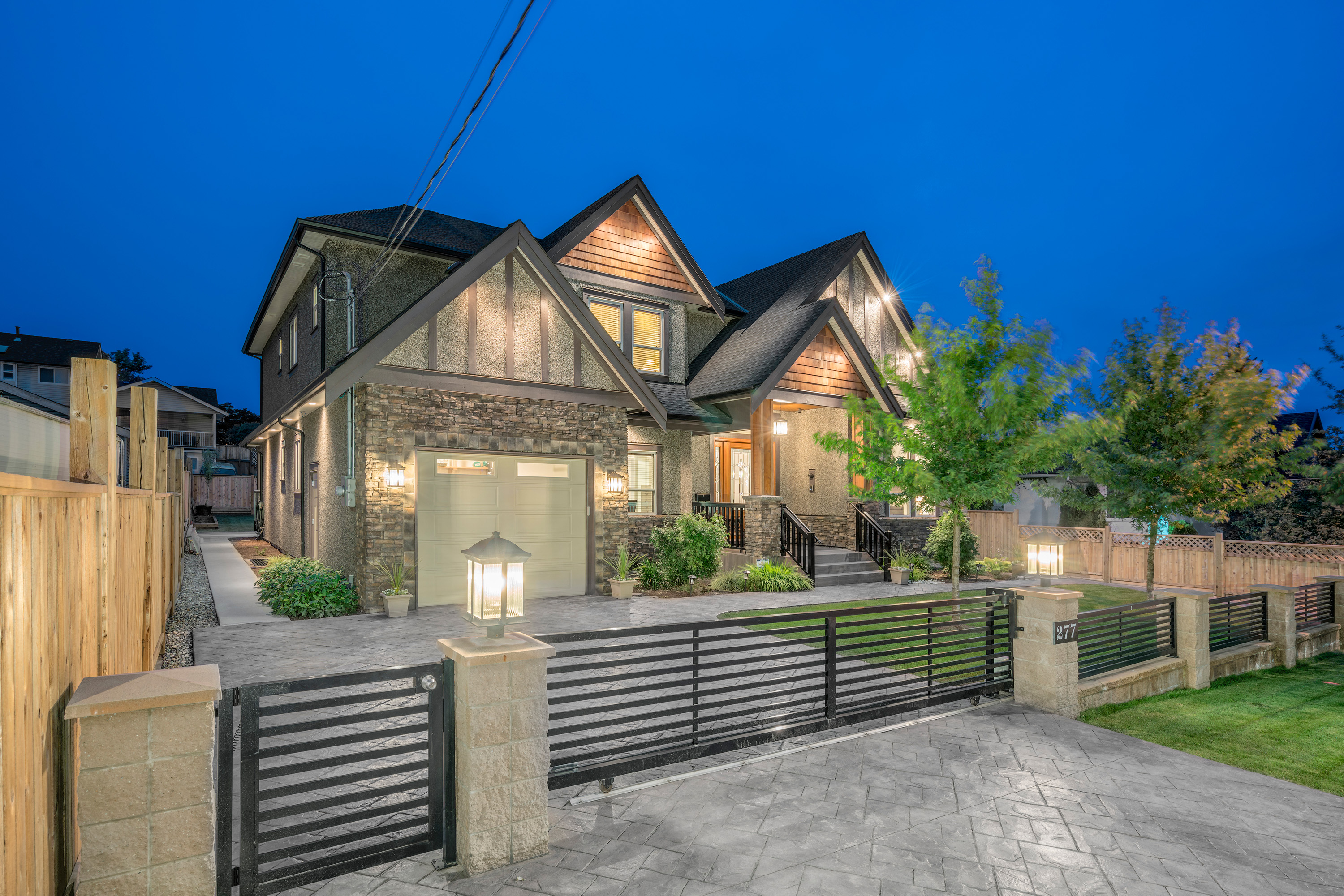
JUST SOLD: 277 Mundy St, Coquitlam Coquitlam East

Private Elevator

Quality Workmanship & Finishing

Priced at $2,298,800

Open: July 14 & 15 from 2 to 4

Click here for more details....

Wait...Did you say ELEVATOR? Yup, you read that right! Stunning 8bed+/8bath/5915sqft/3lvl home on an 8500sqft lot; perfect for a multi-generational family. Features: 9' ceilings, engineered & tile floors, formal living & dining rms, large gourmet kitchen, spice kitchen, dble height ceilings in great rm, well-sized yard & covered patio w/gas. Convenient main lvl guest rm, 4pc, mud rm, & 1 car garage. Up: Catwalk-style layout open to the great rm: a spacious master, walk-in & 5pc ensuite on one side & 3 well sized rms w/ensuites on the other. Down: huge rec. rm, home theater, wet bar, hot tub, pool table, bedrm & 4pc bath. Bonus: large 2 car detached garage & 2 bed legal suite w/separate parking. Act Now! OPEN July 14 & 15 from 2-4 pm.

Read

Balanced Conditions Prevail in BC Housing Market

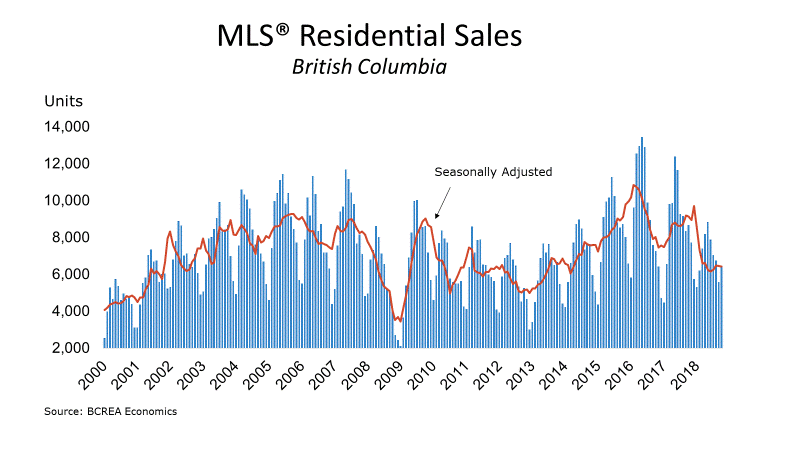
Vancouver, BC – November 14, 2018. The British Columbia Real Estate Association (BCREA) reports that a total of 6,405 residential unit sales were recorded by the Multiple Listing Service® (MLS®) across the province in October, down 26.2 per cent from the same month last year. The average MLS® residential price in BC was $690,161, a decline of 4.1 per cent from October 2017. Total sales dollar volume was $4.2 billion, a 29.3 per cent decline from October 2017.

“The BC housing market continued to grapple with tougher mortgage qualifications in October,” said Cameron Muir, BCREA Chief Economist. “However, more moderate consumer demand has led to a much-needed increase in the supply of homes for sale.”

Total active residential listings were up nearly 30 per cent to 36,195 units in October, compared to the same month last year. While the BC housing market exhibited balanced conditions overall in October, market conditions do vary between regions and by product type.

Year-to-date, BC residential sales dollar volume was down 22.1 per cent to $49.7 billion, compared with the same period in 2017. Residential unit sales decreased 22.8 per cent to 69,664 units, while the average MLS® residential price was up 1 per cent to $713,662.

Read

BCREA is forecasting a better year ahead for BC sales

Home sales in British Columbia have been subdued during 2018 and are expected to end the year 23% lower than 2017 with 80,000.


The figures from the British Columbia Real Estate Board (BCREA) reflect the tough year the province’s housing markets – especially Vancouver – following policy changes including the mortgage stress test and interest rate hikes. It could have been worse though had the economy not remained supportive.


But there is better news ahead with sales forecast to rise 12% in 2019 to 84,000 units, just above the 10-year average of 80,000.


“The marked erosion of affordability and purchasing power caused by the mortgage stress test and rising interest rates continue to be a drag on the housing demand,” said Cameron Muir, BCREA Chief Economist. “However, continuing strong performance in the economy combined with favourable demographics is expected to push home sales above their 10- year average in 2019.”


Most markets in BC have moved to balanced conditions with fewer sales and rising inventory. That has meant an easing of price appreciation which is expected to more closely track consumer price inflation in 2019.


Record construction in BC is also bringing new supply to the market which BCREA believes should further support price stability.


Provided by:  Steve Randall for the Real Estate Professional

Read

The British Columbia Real Estate Association (BCREA) released its 2018 Fourth Quarter Housing Forecast today.

Multiple Listing Service® (MLS®) residential sales in the province are forecast to decline 23 per cent to 80,000 units this year, after recording 103,768 residential sales in 2017. MLS® residential sales are forecast to increase 12 per cent to 89,500 units in 2019. The 10-year average for MLS® residential sales in the province is 84,800 units.

“The marked erosion of affordability and purchasing power caused by the mortgage stress test and rising interest rates continue to be a drag on the housing demand,” said Cameron Muir, BCREA Chief Economist. “However, continuing strong performance in the economy combined with favourable demographics is expected to push home sales above their 10year average in 2019.”

Despite the mortgage policy drag on the sector, strong performance of the BC economy continues to be highly supportive of housing demand. Five consecutive years of above trend growth in the province has led to a high level of employment and an unemployment rate that appears to be at a cyclical low.

The combination of fewer home sales and a larger inventory of homes for sale has helped trend most markets to balanced conditions. As a result, home price growth has slowed considerably, and is expected to more closely reflect overall consumer price inflation through 2019. In addition, a record number of homes are under construction in BC, which will provide for much needed expansion of the housing stock and greater price stability.


click here for more....


Provided by: BCREA

Read

Canada’s housing markets should see a moderation in both housing starts and sales while house prices are expected to reach levels that are more in line with economic fundamentals such as income, job and population growth. This forecast for 2019 and 2020 is drawn from the 2018 Housing Market Outlook released today by Canada Mortgage and Housing Corporation (CMHC).


Nationally, CMHC’s outlook for 2019 projects total housing starts to edge down and range between 193,700 to 204,500 with the downward trend expected for both single and multi-unit starts. MLS sales are expected to be between 478,400 and 497,400 units annually while MLS prices should lie between $501,400 and $521,600.

Regional Highlights:

British Columbia

Housing starts activity and MLS Sales in British Columbia should moderate as economic and population growth slows while MLS Average Prices are expected to see a flatter growth profile through 2020.

Prairies

Buyers’ market conditions in both Alberta and Saskatchewan should gradually shift to a balanced market with gradual improvement in economic and demographic fundamentals. Balanced market conditions in Manitoba are expected to continue.

Ontario

Ontario’s housing market saw dampened activity in 2018. Existing home sales and starts will post a partial recovery in 2019. Buyers are expected to re-enter the market on the strength of stronger than expected job growth and in-migration before the downward trend in starts and sales resumes in 2020.

Québec

Housing starts and sales of existing homes will both be sustained, however, slower economic growth and rising borrowing costs will moderate activity through 2020. Starts will continue to be dominated by the apartment market segment, while demand for resale single-detached homes will remain relatively strong.

Atlantic

The Atlantic region will see sustained activity, notably in Nova Scotia, where existing home sales and average prices should trend higher while rental demand will drive growth in apartment construction.

Selected CMA-level Highlights:

Metro Vancouver

Over the next two years, Metro Vancouver’s resale market will see lower sales, higher inventories of homes for sale and lower home prices compared with recent market highs. Through 2018, demand and home prices softened across all market segments and local geographies.

Calgary

Various factors will push and pull the demand for housing in Calgary in 2019 and 2020. Calgary’s economy will experience stronger growth in population and employment. This will help support demand and lift sales in 2019 and 2020. However, the average MLS price will continue to face downward pressure but is expected to stabilise in 2019 and modestly rise in 2020.

Toronto

With balanced conditions prevailing in the GTA, we expect moderate sales growth and home prices growing in line with inflation over the forecast horizon. The rising costs of home ownership will result in strong rental demand while new supply will add some upward pressure on vacancy rates. Toronto buyers should see more housing choices as builders concentrate their efforts on new high-rise projects.

Montreal

In 2018 and 2019, rental housing demand will increase slightly faster than supply in Montreal, which will put some downward pressure on the vacancy rate. Demand will be supported by rising net migration over the forecast horizon.


Provided by: CMHC

Read

Just Sold: 404 2328 Oxford St., Vancouver East, Hastings


Top Floor, South Facing

Investor Friendly Building

Priced at $418,000


click here for more...


BRAND NEW! Well might as well be. The Mariner, located in the heart of Hastings-Sunrise, centrally located to all sorts of amenities with a walk-score of 86, has been completely upgraded: full envelope replacement, roof, windows, balconies, railings, exterior lighting & update plumbing. All under warranty & recently completed. This is a must see. #404 is a top floor, bright south facing 1 bed & den, 1 bath, 609sqft home with an update bath & engineered flooring. Enjoy BBQs from a massive covered balcony. Bonus: 1 parking, hot water baseboard heat, rental & pet friendly. Act Now! Book your private viewing.

Read

Home sale activity across Metro Vancouver* remained below long-term historical averages in October.

The Real Estate Board of Greater Vancouver (REBGV) reports that residential home sales in the region totalled 1,966 in October 2018, a 34.9 per cent decrease from the 3,022 sales recorded in October 2017, and a 23.3 per cent increase compared to September 2018 when 1,595 homes sold.

Last month’s sales were 26.8 per cent below the 10-year October sales average.

“The supply of homes for sale today is beginning to return to levels that we haven’t seen in our market in about four years,” Phil Moore, REBGV president said. “For home buyers, this means you have more selection to choose from. For sellers, it means your home may face more competition, from other listings, in the marketplace.”

There were 4,873 detached, attached and apartment homes newly listed for sale on the Multiple Listing Service® (MLS®) in Metro Vancouver in October 2018. This represents a 7.4 per cent increase compared to the 4,539 homes listed in October 2017 and a 7.7 per cent decrease compared to September 2018 when 5,279 homes were listed.

The total number of homes currently listed for sale on the MLS® system in Metro Vancouver is 12,984, a 42.1 per cent increase compared to October 2017 (9,137) and a 0.8 per cent decrease compared to September 2018 (13,084).

For all property types, the sales-to-active listings ratio for October 2018 is 15.1 per cent. By property type, the ratio is 10.3 per cent for detached homes, 17.3 per cent for townhomes, and 20.6 per cent for condominiums.

Generally, analysts say that downward pressure on home prices occurs when the ratio dips below the 12 per cent mark for a sustained period, while home prices often experience upward pressure when it surpasses 20 per cent over several months.

“Home prices have edged down between three and five per cent, depending on housing type, in our region since June,” said Moore. “This is providing a little relief for those looking to buy compared to the all-time highs we’ve experienced over the last year.”

The MLS® Home Price Index composite benchmark price for all residential homes in Metro Vancouver is currently $1,062,100. This represents a one per cent increase over October 2017 and a 3.3 per cent decrease over the last three months.

Sales of detached homes in October 2018 reached 637, a 32.2 per cent decrease from the 940 detached sales recorded in October 2017. The benchmark price for detached properties is $1,524,000. This represents a 5.1 per cent decrease from October 2017 and a 3.9 per cent decrease over the last three months.

Sales of apartments reached 985 in October 2018, a 35.7 per cent decrease compared to the 1,532 sales in October 2017. The benchmark price of an apartment property is $683,500. This represents a 5.8 per cent increase from October 2017 and a 3.1 per cent decrease over the last three months.

Attached homes sales in October 2018 totalled 344, a 37.5 per cent decrease compared to the 550 sales in October 2017. The benchmark price of an attached home is $829,200. This represents a 4.4 per cent increase from October 2017 and a 2.8 per cent decrease over the last three months.


Click here for more...


Provided by: REBGV

Read

Despite an easing in prices, the Canadian housing market remains “highly vulnerable,” according to the Canadian Mortgage and Housing Corporation.


Home sales and prices are coming down in Vancouver, but it is still an overheated market, according to a Canada Mortgage and Housing Corporation’s latest look at stability in real estate markets across the country.


“Metro Vancouver’s housing market remains highly vulnerable despite softening prices in the resale market,” said Eric Bond, CMHC’s Vancouver-based analyst.


“There are imbalances even though prices are declining for properties in different segments, in the most recent quarter, because home price growth over the past few years has significantly outpaced local income growth.”


The CMHC’s Housing Market Assessment report released Thursday looked at overheating, price acceleration and overvaluation.


Overheating in the Vancouver market “was first detected” in the last quarter of 2015, according to the report.

Now, the sales-to-new-listings-ratio, which is a way of measuring the balance between demand and supply, is below the 75 per cent threshold designated by the CMHC to trigger an overheating warning.


However, the agency is maintaining Vancouver’s market is overheated because the CMHC model has a “persistence” rule defined by there being a trigger in at least one quarter in the previous three years.


Also, even though the overall sales-to-new-listings ratio for Metro Vancouver has been dropping in 2018, the agency says they have varied widely depending on market location and type.


In the third quarter of 2017, the sales-to-new-listings ratio for single-detached homes ranged from the lowest in West Vancouver of six per cent to a high of 32 per cent in Port Coquitlam. A year later in the third quarter of 2018, it dropped to four per cent in West Vancouver, but saw a much larger drop to 14 per cent in Port Coquitlam.

For condos, there were some steep changes in sales-to-new-listing ratios from 51 per cent in the third quarter of 2017 to 16 per cent in 2018 in Langley, and 40 per cent to 16 per cent in Surrey.


The report first identified price acceleration in the Vancouver market in the second quarter of 2016. Its definition is based again on a significant price increase in at least one quarter in the previous three years and says that “rapid short-term price gains can attract investors and promote speculative activity that pushes prices further upwards.”


“Price growth has slowed considerably so far in 2018 and has turned negative over the past six months in most areas. Declining prices for detached properties in particular are due to high inventories that have accumulated due to sustained declining sales volumes.”


Lastly, when it comes to overvaluation, there is still “high evidence” that in the second quarter of 2018 “current price levels are higher than the estimated values from price models based on demand and supply fundamental factors such as population, income and financing costs.”


There are signs that in the second quarter of 2018 price levels started to move down below the threshold for determining overvaluation and closer to “the actual values of an array of price measures.”


However, “the rating is maintained because the indicator has been above the threshold for at least two quarters over the past year.”


“High price levels coupled with rising mortgage rates since the second half of 2017 continue to stretch home affordability in (Vancouver.)”


Provided by: Joanne Lee-Young for The Vancouver Sun & CMHC

Read

The Bank of Canada today increased its target for the overnight rate to 1 ¾ per cent. The Bank Rate is correspondingly 2 per cent and the deposit rate is 1 ½ per cent.

The global economic outlook remains solid. The US economy is especially robust and is expected to moderate over the projection horizon, as forecast in the Bank’s July Monetary Policy Report (MPR). The new US-Mexico-Canada Agreement (USMCA) will reduce trade policy uncertainty in North America, which has been an important curb on business confidence and investment. However, trade conflict, particularly between the United States and China, is weighing on global growth and commodity prices. Financial market volatility has resurfaced and some emerging markets are under stress but, overall, global financial conditions remain accommodative.


The Canadian economy continues to operate close to its potential and the composition of growth is more balanced. Despite some quarterly fluctuations, growth is expected to average about 2 per cent over the second half of 2018. Real GDP is projected to grow by 2.1 per cent this year and next before slowing to 1.9 per cent in 2020.


The projections for business investment and exports have been revised up, reflecting the USMCA and the recently-approved liquid natural gas project in British Columbia. Still, investment and exports will be dampened by the recent decline in commodity prices, as well as ongoing competitiveness challenges and limited transportation capacity. The Bank will be monitoring the extent to which the USMCA leads to more confidence and business investment in Canada.


Household spending is expected to continue growing at a healthy pace, underpinned by solid employment income growth. Households are adjusting their spending as expected in response to higher interest rates and housing market policies. In this context, household credit growth continues to moderate and housing activity across Canada is stabilizing. As a result, household vulnerabilities are edging lower in a number of respects, although they remain elevated.


CPI inflation dropped to 2.2 per cent in September, in large part because the summer spike in airfares was reversed. Other temporary factors pushing up inflation, such as past increases in gasoline prices and minimum wages, should fade in early 2019. Inflation is then expected to remain close to the 2 per cent target through the end of 2020. The Bank’s core measures of inflation all remain around 2 per cent, consistent with an economy that is operating at capacity. Wage growth remains moderate, although it is projected to pick up in the coming quarters, consistent with the Bank’s latest Business Outlook Survey.


Given all of these factors, Governing Council agrees that the policy interest rate will need to rise to a neutral stance to achieve the inflation target. In determining the appropriate pace of rate increases, Governing Council will continue to take into account how the economy is adjusting to higher interest rates, given the elevated level of household debt. In addition, we will pay close attention to global trade policy developments and their implications for the inflation outlook.

Read

Luxury home sales in two of Canada’s most expensive markets are down from a year, as the high-end real estate market feels the effect of foreign buyers taxes.


TORONTO — Sales of luxury homes in two of Canada’s most expensive cities fell this year, as the high-end real estate market continued to feel the impact of foreign buyers taxes.


Realty brokerage Re/Max says sales of single-detached homes priced from $1 million to $2 million fell 35 per cent from a year ago in both Toronto and Vancouver.


According to the annual report, released Tuesday, sales of single-detached homes in the $2-million-to-$3-million range were down 50 per cent in Toronto and 22 per cent in Vancouver.


Meanwhile, homes that were sold for more than $3 million dropped 44 per cent in Toronto and 45 per cent in Vancouver.


Re/Max says homebuyers have been grappling with the introduction of foreign buyers taxes in Ontario and B.C., along with increased property transfer taxes and school taxes on B.C. homes over $3 million.


“All the new rules that the government implemented, along with the foreign buyers tax and the new lending regulations, it all just put a crunch on the most expensive part of the market,” said Christopher Alexander, executive vice-president and regional director of Re/Max Integra’s Ontario-Atlantic business.


He says luxury homeowners may have also been hesitant to list this year amid signs that the country’s housing market may be cooling, choosing instead to “wait it out.”


Although luxury home sales are weakening, sales in the low-end of the luxury condo market saw increases driven mainly by millennials who are using their inheritances and baby boomers looking to downsize, the report said.

Alexander says condos appeal to baby boomers because they can get more value for their money, especially in the major cities.


“Most of them have put all their kids in school. They don’t need so much space anymore. Their single-detached home is worth a fortune and now they can buy a really nice luxury condo that is not as big in a really great urban area where they have access to a more urbanized lifestyle, more action,” he said.


“Luxury is not just about price. A lot of it has to do with pedigree. If you buy with a million in Toronto or Vancouver, it doesn’t get you a luxury home but if you get a suite in the Four Seasons or the Shangri-La or the Ritz-Carlton. You’re going to get a small condo in a luxury building with all the luxury amenities. You’ve got that pedigree piece that is appealing to the higher end of the market.”


The report says condo sales in the $1-million-to-$2-million range were up two per cent year over year in Toronto and six per cent in Vancouver. Calgary saw their condo sales in this price range jump by three per cent, while Victoria sales climbed 19 per cent.


The most expensive condominium sold in Toronto in 2018 so far was priced at $11.5 million, topping the $8 million that was paid for the most expensive condo sold in 2017. The priciest condo sold in Vancouver so far this year was $11.7 million, up 34 per cent from the top price of $8.7 million paid last year.


Provided by: The Canadian Press

Read

The British Columbia Real Estate Association welcomes the Government of British Columbia’s inclusion of exemptions from the speculation and vacancy tax proposed as Bill 45 today, Tuesday, October 16, 2018. Some of the exemptions directly address concerns BCREA brought to the Province’s attention through its advocacy work.

The Bill allows for exemptions for British Columbians going through traumatic life events such as illness and divorces or separations. It also allows for exemptions for owners of properties that are being developed or undergoing renovations.

It also exempts strata units from a vacancy tax for 2018 and 2019, where strata restrictions prohibit rentals. Further clarity is needed on this exemption and other implications.

BCREA, its 11 regional real estate boards and the 23,000 REALTORS® they represent look forward to providing the Province with REALTOR® insight on the implementation of Bill 45 to ensure that the best interests of BC homeowners are served.

Read the Province’s news release here. Learn more about the speculation and vacancy tax here.


Provided by: BCREA

Read
Reciprocity Logo The data relating to real estate on this website comes in part from the MLS® Reciprocity program of either the Greater Vancouver REALTORS® (GVR), the Fraser Valley Real Estate Board (FVREB) or the Chilliwack and District Real Estate Board (CADREB). Real estate listings held by participating real estate firms are marked with the MLS® logo and detailed information about the listing includes the name of the listing agent. This representation is based in whole or part on data generated by either the GVR, the FVREB or the CADREB which assumes no responsibility for its accuracy. The materials contained on this page may not be reproduced without the express written consent of either the GVR, the FVREB or the CADREB.