RSS

Vancouver's attempt to address the issue of people purchasing properties and leaving them empty is hurting the wrong people, citizen group says.

The lot at 6161 Macdonald St., Vancouver, owned by Jane Macdougall. Ms. Macdougall restored the house at the right, then subdivided the adjoining empty lot. PHOTOS COURTESY OF Jane Macdougall 


When Samantha Reynolds got a reminder from the city in the mail that she had not yet submitted her Empty Homes Tax declaration, she shook her head at the irony.


Ms. Reynolds lives a few houses down from a house owned by the city that has been vacant for almost two years.


Last summer, the city-owned character house at 3030 Victoria Dr. became a case of bad publicity for the city when it was revealed in this column that the city purchased the house in February, 2016 and left it empty.


City hall and the park board, had plans to tear it down and leave it as a vacant lot, with the expectation that the other homeowners on the block would also sell. All the houses would then be torn down to create more parkland. The block is adjacent to John Hendry Park, better known as Trout Lake. But the residents on the block are part of a tight-knit community and have no plans to leave. After neighbourhood push back, the city said the house would remain and it was to be rented out. However, it has remained empty for almost two years.


There are 25,502 unoccupied or empty homes across the city, according to the last census. The rental vacancy rate is less than one per cent.


"I would like them to be accountable to their empty promise; to rent the house out," Ms. Reynolds says.

She'd also like the city to give up its plan to create more parkland and put the house back on the market, since there's a housing crisis.


"As a neighbourhood we are not backing down. We want them to reverse the whole plan."


When I contacted the city last week, staff said they were just about to put out a request for a co-op operator who could take on a lease and find tenants for the house. The operator would also have to do repairs according to the building code. (The first winter the city owned the house, no one turned off the water and the pipes froze and broke.) There was no explanation as to why that process had not begun several months ago.


Double standard aside, the Empty Homes Tax (EHT) is well intentioned. It was introduced in order to address the practice of purchasing properties and leaving them empty as mere land banks. Rich property owners who can afford to leave a perfectly good home empty is just the sort of crass wastefulness that is making Vancouver residents apoplectic. Kerrisdale and Dunbar are full of empty new homes that symbolize the hypercommodification of housing that's become a Vancouver specialty.


The EHT becomes a reality on Feb. 2, also the deadline for Vancouver homeowners to declare whether they are holding a property that has been empty for more than six months. The tax amounts to one per cent of the home's assessed value, which will be due by April 16. People who make false declarations will face fines up to $10,000 a day, as well as the tax.


But some are arguing that the tax is sweeping up a good many innocent citizens in its attempt to net those homeowners who have turned housing into a mere money-maker.


Developer Michael Geller calls the approach well intentioned but "absurd" – a tax that will only incentivize people to find ways around it.


"They will either figure out a clever way to get around it, or sell their places. That's what's happening. A number have sold them, but others have come up with clever legal structures to avoid paying the tax."

He also questions what will happen when someone purchases an empty house. If audited, will the new buyer be stuck with the previous owner's EHT?


"There is a whole series of unintended consequences, which the city should have remedied and instead they are simply standing by it," Mr. Geller says.

Story continues below advertisement


There's the case of Jane Macdougall, who owns a lot that has never had a house on it. In 2005, she had restored and saved a significant Tudor Revival heritage house on a large lot, and, with the help of a Heritage Revitalization Agreement, she subdivided the adjoining empty lot. The grand house, with its striking Gothic arch entrance, was designed by Hodgson & Simmonds in 1930. That same year, Simmonds designed the Stanley Theatre.


Ms. Macdougall says she will owe around $60,000 in total taxes for the lot, including the EHT. She says she's being punished for not providing housing, while the City – which will face no penalty for leaving 3030 Victoria Dr. standing empty – is held to a different standard.


("City of Vancouver-owned properties are exempt from payment of property taxes under the Vancouver Charter and are therefore exempt from the Empty Homes Tax," city staff said in an e-mail.)

Jane Macdougall says she'll owe $60,000 in total taxes, including the EHT, for a lot that has never had a house on it.

Despite its significance, Ms. Macdougall could have torn the house down and made a fortune from the three city lots that it occupied. It happens all the time in Vancouver. Instead, she sold off the house and planned to build on the lot that remained. However, building on a property that had limited access proved to be a case of endless bureaucratic red tape.


Instead, Ms. Macdougall bought a house elsewhere and allowed the owners of her former house to use the lot as garden in exchange for maintaining it.


Now, she has discovered the EHT also applies to empty lots such as hers. The city had included empty lots in the tax because they quite rightly realized that some homeowners would rather bulldoze their houses than pay the tax. Ms. Macdougallis in a unique predicament. She says city staff have advised her to take out development permits.


"I'm thinking, 'Okay, do you want to give me the $2-million it's going to take to build on this? And who am I building it for? And to what end? And how does that address the ridiculous crisis of affordability in housing that we have found ourselves in as a result of, in my estimation, some people not being proactive when they needed to be?"


Dr. Rainer Borkenhagen started the citizen group, Unfair Vancouver Vacant Homes Tax Coalition, last spring, and it has hired legal counsel to advise them on whether they should take action against the bylaw. The group, which numbers about 80 people, is made up of retirees, artists and working professionals who come and go from Vancouver. Dr. Borkenhagen lives on the Sunshine Coast and owns a small condo in Vancouver, which was intended for family gatherings since their family has become dispersed. Once the tax was announced, they found a family friend to rent it last year, and this year they intend the condo for their own use. If they hadn't rented the unit last year, they'd be looking at an EHT of about $8,000, Dr. Borkenhagen says.


They feel the tax unfairly targets tax-paying citizens who've done nothing wrong.


The way the bylaw is written, only people who are working in Vancouver can occupy a secondary unit for a minimum of six months of the year. It doesn't apply to retirees, which, he says, is discriminatory.


"If it's your secondary home, you have to prove that you are there for six months working," says Dr. Borkenhagen, who still works, but will retired people who used to be full-time in Vancouver."


Dr. Borkenhagen makes a number of strong points. The tax is retroactive, which means it affects people who would have never purchased a secondary unit if they had known about the tax.


He says that if he does rent out his secondary unit, he doesn't have to prove that the tenant is working, or even spending a lot of time in it. So, the tenant can come and go, but not the retired owner. As well, with housing costs the way they are, a pied-à-terre is often the only way that parents can visit their city-dwelling children, he argues. The family has become decentralized.


"The other thing is, how are they going to monitor it? Right now it's the honour system, what you declare. And then they threaten to audit you, and industrial-size penalties of up to $10,000 a day. The threat is there."


It is not a tax, but a fine, he says. And it's a substantial fine for retirees on a fixed income.


"They should just across the board increase taxes and put the increase towards social housing," he says. "People like us, taxpayers who've paid our dues in everything, do not throw us in the pot and say, 'you're a culprit.' They should recognize that the issue is much bigger.


"They see us as a necessary collateral damage," he adds. "But they want to keep it clean and easy and not look at too many exceptions to the bylaw, because it becomes too difficult to administer."


As of last week, 62 per cent, or 116,000 property owners had made their declarations this year. "What the city is saying is there is no room for retired people who used to be full-time in Vancouver." The city says it will release the number of declared vacant properties later this year. It's unclear how the bylaw will be enforceable, other than an audit, if the city asks for it. In that case, the homeowner will have to prove that they qualify for one of several exemptions.


Empty homes represent speculative buying by mystery buyers who often have no other connection to the city than real estate. Local incomes can't compete.


Until government gets tough on foreign money, the empty home will remain what it is – a symbol of an empty promise to meaningfully do something.


Provided by: Kerry Gold with the Globe & Mail

Read

The Bank of Canada today increased its target for the overnight rate to 1 1/4 per cent. The Bank Rate is correspondingly 1 1/2 per cent and the deposit rate is 1 per cent. Recent data have been strong, inflation is close to target, and the economy is operating roughly at capacity. However, uncertainty surrounding the future of the North American Free Trade Agreement (NAFTA) is clouding the economic outlook.


The global economy continues to strengthen, with growth expected to average 3 1/2 per cent over the projection horizon. Growth in advanced economies is projected to be stronger than in the Bank’s October Monetary Policy Report (MPR). In particular, there are signs of increasing momentum in the US economy, which will be boosted further by recent tax changes. Global commodity prices are higher, although the benefits to Canada are being diluted by wider spreads between benchmark world and Canadian oil prices.


In Canada, real GDP growth is expected to slow to 2.2 per cent in 2018 and 1.6 per cent in 2019, following an estimated 3.0 per cent in 2017. Growth is expected to remain above potential through the first quarter of 2018 and then slow to a rate close to potential for the rest of the projection horizon.


Consumption and residential investment have been stronger than anticipated, reflecting strong employment growth. Business investment has been increasing at a solid pace, and investment intentions remain positive. Exports have been weaker than expected although, apart from cross-border shifts in automotive production, there have been positive signs in most other categories.


Looking forward, consumption and residential investment are expected to contribute less to growth, given higher interest rates and new mortgage guidelines, while business investment and exports are expected to contribute more. The Bank’s outlook takes into account a small benefit to Canada’s economy from stronger US demand arising from recent tax changes. However, as uncertainty about the future of NAFTA is weighing increasingly on the outlook, the Bank has incorporated into its projection additional negative judgement on business investment and trade.


The Bank continues to monitor the extent to which strong demand is boosting potential, creating room for more non-inflationary expansion. In this respect, capital investment, firm creation, labour force participation, and hours worked are all showing promising signs. Recent data show that labour market slack is being absorbed more quickly than anticipated. Wages have picked up but are rising by less than would be typical in the absence of labour market slack.


In this context, inflation is close to 2 per cent and core measures of inflation have edged up, consistent with diminishing slack in the economy. The Bank expects CPI inflation to fluctuate in the months ahead as various temporary factors (including gasoline and electricity prices) unwind. Looking through these temporary factors, inflation is expected to remain close to 2 per cent over the projection horizon.


While the economic outlook is expected to warrant higher interest rates over time, some continued monetary policy accommodation will likely be needed to keep the economy operating close to potential and inflation on target. Governing Council will remain cautious in considering future policy adjustments, guided by incoming data in assessing the economy’s sensitivity to interest rates, the evolution of economic capacity, and the dynamics of both wage growth and inflation.

Information note

The next scheduled date for announcing the overnight rate target is March 7, 2018. The next full update of the Bank’s outlook for the economy and inflation, including risks to the projection, will be published in the MPR on April 18, 2018

Read

Simon Fraser University 2017 A Year in Review


Happy New Year!  I wish you and your families a healthy and prosperous 2018. 

Another year has come and gone and what a year it is has been.  There was significant media attention given to the real estate market in the Lower Mainland.  It felt like not a day went by that some news outlet was reporting something about real estate.  And it was not just about home prices. 


Prices are too high. Debt levels are too high. Vancouver real estate market highest in the world.  And, oh Foreign Buyers, Foreign Buyers, Foreign Buyers!!


So, are prices too high?  Are we carrying too much debt?  Will there be a major correction?  The long and short answer is we really do not know.


To add to all the extra confusion, we have a new mortgage stress test that will apply not just to mortgages with under 20% down payment but as of January 1, 2018 to all new mortgages. 

I think the one thing to take away from all of this is that markets will go up and markets will go down.  Real Estate in Vancouver is an interesting topic.


The Greater Vancouver Real Estate Market in 2017, in my opinion, can be summarized in two words: Low Inventory.


Although sales trended to more historically normal levels compared to 2015 and 2016, a decrease of 9.9% over 2016 and 15% decrease over 2015, listings were much lower.  2017 sales were still 9.7% above the 10-year average.  However, listings were off by 5.1% over 2016 and 4.5% over 2015.  Or 4.4% below the 10-year average.


This all translated to an increase of price of 15.9% over 2016 according to the Home Price Index (“HPI”).


Specifically looking at the Simon Fraser University (“SFU”), 2017 saw an amazing unprecedented rise of 22.3% according to the HPI.  That is a 5% increase over 2016.  During 2015 the market in SFU increased by only 12.5%.  So, between 2016 and 2017, SFU prices have appreciated a whopping 40.7%.  Congratulations if you were one of the lucky ones that got in the market. 


Click here for the Home Price Index


There was a total of 168 sales registered through the MLS system, including resale and presale construction.  This is an approximate decrease of 17% compared to 2016.  Given that we now have approximately 1750 resale units on the market, 168 sales represent only 4% of the entire available stock in 2017.

Here is a summary of 2017 vs. 2016 performance for SFU, UniverCity


2017

2016

% Difference

Number of Sales

168

203

-17%

Avg. Price

$495,024

$423,659

16.8%

Avg. cost per sqft

$578

$495

16.8%

Avg. Days on Market

27

37

-27%


This brings us to current market conditions on the mountain.  Inventory levels are incredibly low.  There are presently only 12 units for sale as of January 15, 2017. Prices range from $418,000 for a 710sqft, 2 bed and 1 bath home to a 1,141sqft, 2 bed and 2 bath penthouse that is under construction at the Terraces by InterGulf listed at $1,499,000.

Low inventory levels and strong demand coupled with a milder than normal winter are all signs that UniverCity at Simon Fraser University should perform well in Q1 of 2018.  Activity has already been very good at open houses in my personal experience. 


Contact us now if you have any questions about the market in general or specifically if you would like to learn more about the Simon Fraser University area.

Read

Statistics released today by The Canadian Real Estate Association (CREA), show national home sales continued to climb in December 2017.


Highlights:

  • National home sales rose 4.5% from November to December.
  • Actual (not seasonally adjusted) activity was up 4.1% year-over-year (y-o-y).
  • The number of newly listed homes climbed 3.3% from November to December.
  • The MLS® Home Price Index (HPI) in December was up 9.1% y-o-y.
  • The national average sale price advanced by 5.7% y-o-y.
 

Home sales via Canadian MLS® Systems posted their fifth consecutive monthly increase in December 2017, fully recovering from the slump last summer.


Activity in December was up in close to 60% of all local markets, led by the Greater Toronto Area (GTA), Edmonton, Calgary, the Fraser Valley, Vancouver Island, Hamilton-Burlington and Winnipeg.


Actual (not seasonally adjusted) activity was up 4.1% from December 2016. While activity remained below year-ago levels in the GTA, the decline there was more than offset by some sizeable y-o-y gains in the Lower Mainland of British Columbia, Vancouver Island, Calgary, Edmonton, Ottawa and Montreal.


“Monthly momentum for national home sales activity gained strength late last year and further expected economic and job growth will buoy sales activity this year despite slightly higher expected interest rates,” said CREA President Andrew Peck. “Even so, momentum for home sales differs depending on location and type,” he added. “A professional REALTOR® is your best source for information and guidance in negotiations to purchase or sell a home during these changing times,” said Peck.


“National home sales in December were likely boosted by seasonal adjustment factors and a potential pull-forward of demand before new mortgage regulations came into effect this year,” said Gregory Klump, CREA’s Chief Economist. “It will be interesting to see if monthly sales activity continues to rise despite tighter mortgage regulations that took effect on January 1st.”


The number of newly listed homes rose 3.3% in December. As in November, the national increase was overwhelmingly due to rising new supply in the GTA.


New listings and sales have both trended higher since August. As a result, the sales-to-new listings ratio has remained in the mid-to-high 50% range since then.


A national sales-to-new listings ratio of between 40% and 60% is generally consistent with a balanced national housing market, with readings below and above this range indicating buyers’ and sellers’ markets respectively. That said, the balanced range can vary among local markets.


Considering the degree and duration that the current market balance is above or below its long-term average is a more sophisticated way of gauging whether local housing market conditions favour buyers or sellers.


Market balance measures that are within one standard deviation of the long-term average are generally consistent with balanced market conditions.


Based on a comparison of the sales-to-new listings ratio with its long-term average, more than two-thirds of all local markets were in balanced market territory in December 2017.


The number of months of inventory is another important measure of the balance between housing supply and demand. It represents how long it would take to liquidate current inventories at the current rate of sales activity.

There were 4.5 months of inventory on a national basis at the end of December 2017. The measure has been moving steadily lower in tandem with the monthly rise in sales that began last summer.


The number of months of inventory in the Greater Golden Horseshoe region (2.1 months) was up sharply from the all-time low reached in March 2017 (0.9 months). Even so, the December reading stood a full month below the region’s long-term average (3.1 months) and reached a seven-month low.


The Aggregate Composite MLS® HPI rose by 9.1% y-o-y in December 2017. This was the 8th consecutive deceleration in y-o-y gains, continuing a trend that began in the spring. It was also the smallest y-o-y increase since February 2016.


The deceleration in y-o-y price gains largely reflects trends among Greater Golden Horseshoe housing markets tracked by the index, particularly for single-family homes. On an aggregate basis, only single-family price increases slowed on a y-o-y basis. By comparison, y-o-y price gains picked up for townhouse/row and apartment units.


Apartment units again posted the largest y-o-y price gains in December (+20.5%), followed by townhouse/row units (+13%), one-storey single family homes (+5.5%), and two-storey single family homes (+4.5%).


Benchmark home prices were up from year-ago levels in 9 of the 13 markets tracked by the MLS® HPI, with Calgary and Oakville-Milton price comparisons tipping slightly into negative territory on a y-o-y basis.


After having dipped in the second half of last year, composite benchmark home prices in the Lower Mainland of British Columbia have recovered and now stand at new highs (Greater Vancouver: +15.9% y-o-y; Fraser Valley: +20.9% y-o-y).


Benchmark home prices rose by about 14% on a y-o-y basis in Victoria and by about 19% elsewhere on Vancouver Island in December. These y-o-y gains were similar to those recorded in October and November.


Price gains have slowed considerably on a y-o-y basis in the GTA, Guelph and Oakville-Milton; however, home prices in the former 2 markets remain above year-ago levels (Greater Toronto: +7.2% y o-y; Guelph: +13.1% y-o-y; Oakville-Milton: -0.8% y-o-y).


Calgary benchmark home prices were down slightly in December (-0.4% y-o-y), as were home prices in Regina and Saskatoon (-4% y-o-y and -3.7% y-o-y, respectively).


Benchmark home prices rose by 6.6% y-o-y in Ottawa (led by a 7.5% increase in two-storey single family home prices), by 5.4% in Greater Montreal (led by a 6.3% increase in in two-storey single family home prices) and by 6.3% in Greater Moncton (led by an 8.3% increase in one-storey single family home prices). (Table 1)


The MLS® Home Price Index (MLS® HPI) provides the best way of gauging price trends because average price trends are prone to being strongly distorted by changes in the mix of sales activity from one month to the next.

The actual (not seasonally adjusted) national average price for homes sold in December 2017 was just over $496,500, up 5.7% from one year earlier. The national average price is heavily skewed by sales in Greater Vancouver and the GTA, two of Canada’s most active and expensive markets. Excluding these two markets from calculations trims almost $116,000 from the national average price to just under $381,000.


PLEASE NOTE: The information contained in this news release combines both major market and national sales information from MLS® Systems from the previous month. 

CREA cautions that average price information can be useful in establishing trends over time, but does not indicate actual prices in centres comprised of widely divergent neighbourhoods or account for price differential between geographic areas. Statistical information contained in this report includes all housing types. 

MLS® Systems are co-operative marketing systems used only by Canada’s real estate Boards to ensure maximum exposure of properties listed for sale. 

The Canadian Real Estate Association (CREA) is one of Canada’s largest single-industry trade associations, representing more than 120,000 REALTORS® working through some 90 real estate Boards and Associations.

Read

REUTERS

A for-sale sign is pictured in front of a home in Vancouver on Sept. 22, 2016.


Home prices climbed sharply in Canada in 2017 as booming sales in British Columbia offset weaker home sales in Ontario.


The Canadian Real Estate Association released year-end numbers on Monday, reporting the national benchmark home price was $600,300 in December, up 9.1 per cent from a year earlier, according to the MLS Home Price Index.


The national price increase came as home prices in Greater Vancouver climbed 16 per cent in December compared with a year earlier, reaching an MLS benchmark price of $1,050,300 at the end of 2017 as B.C. real estate markets shrugged off the impact of a foreign-buyers tax announced in August, 2016. Prices in the Fraser Valley rose 21 per cent and Vancouver Island prices climbed 19 per cent in December compared with a year earlier.


In Ontario, by comparison, growth slowed in 2017 after the Ontario government introduced a package of reforms in April, including the new foreign-buyers tax. The Greater Toronto Area saw prices rise 7 per cent in December compared with a year earlier, according to the MLS Home Price Index, while prices in Oakville-Milton fell 0.8 per cent in December compared with a year earlier.

Bank of Montreal economist Robert Kavcic said that while volume of home sales fell 7.6 per cent in December in the GTA compared with a year earlier, the result was still a sharp improvement from midyear when sales were down as much as 40 per cent on a year-over-year basis.


Mr. Kavcic said rebounding demand has been met with new supply, as new listings in the GTA climbed 51 per cent in December compared with December, 2016, which is the largest increase in new listings ever on a seasonally adjusted basis.


The result is that growing supply has kept price increases in check, he said, and prices are unlikely to soar again soon after tougher new mortgage qualification stress-test rules took effect on Jan. 1.


"We still view fundamental supply-demand factors as very strong, which should contain the price declines soon," Mr. Kavcic said in a research note.


"However, the new [stress-test] measures and a shift to a rising-rate environment should prevent speculative froth from building again, and contain price growth to a reasonable pace for the remainder of the cycle."


Mr. Kavcic said regions such as Oakville-Milton may have seen prices fall on a year-over-year basis in part because they had higher-than-average levels of foreign investment, which has been affected by the new tax announcement in April.


On a national basis, the number of homes sold in December rose 4.5 per cent over November as sales climbed in 60 per cent of all major local markets during the month, including the GTA and Hamilton-Burlington. CREA said it was the fifth consecutive month of national sales growth, which shows Canada is "fully recovering" from the slump last summer.


But sales were still down 4 per cent nationally based on the total volume of sales throughout the year, which marks the worst performance for sales since 2010, said Toronto-Dominion Bank economist Rishi Sondhi.

TD is anticipating national sales will fall in 2018 from 2017, Mr. Sondhi said, as the new mortgage rules and interest-rate increases restrain growth, but is not forecasting a sharp market correction.


"We're not expecting an outsized, sharply lower plunge in prices," Mr. Sondhi said.


Mr. Sondhi said the GTA market has a relatively large share of uninsured mortgages that will be affected by new mortgage stress-test rules, which means January's report will be "all the more closely scrutinized" to try to assess the impact of the regulations.


CREA expects economic and job growth in 2018 will buoy sales this year. However, CREA chief economist Gregory Klump said national sales in December were also likely boosted by a rush to lock in purchases before the introduction of the mortgage stress-test rules, so sales could be affected in early 2018.


"It will be interesting to see if monthly sales activity continues to rise despite tighter mortgage regulations that took effect on Jan. 1," Mr. Klump said.


The MLS Home Price Index adjusts for the mix of home types sold during the year to provide a benchmark sales price. The average sale price in Canada, by comparison, rose 5.7 per cent in December to $496,532, which was significantly lower than the benchmark price. The average was pulled lower by the larger proportion of condominium sales compared with single-family homes, especially in the GTA.


Home sale prices fell in four of 14 major markets included in the MLS Home Price Index. Prices dropped 4 per cent in Regina in December compared with a year earlier, while Saskatoon recorded a 3.7-per-cent decline, Calgary saw a fall 0.4 per cent and prices in Oakville-Milton slipped 0.8 per cent.


Prices climbed 5.4 per cent in Greater Montreal in December compared with a year earlier, according to MLS Home Price Index, while Ottawa saw a 6.6-per-cent price increase.


Provided by:  with the Globe & Mail


Read

The British Columbia Real Estate Association (BCREA) reports that a total of 103,763 residential unit sales were recorded by the Multiple Listing Service® (MLS®) across the province in 2017, a decline of 7.5 per cent from a record 112,211 unit sales in 2016. The average MLS® residential price in BC was $709,579 in 2017, up 2.7 per cent from the previous year. Total sales dollar volume was $73.63 billion, down 5.1 per cent from 2016.


“Robust housing demand in 2017 was underpinned by a strong economy, employment growth and rising wages,” said Cameron Muir, BCREA Chief Economist. “Above trend migration, both international and interprovincial, also bolstered housing demand, while broader demographic fundamentals added fuel to condominium sales in urban centres and to all home types in retirement-oriented communities.”


The BC housing market ended the year with a strong December. Home sales increased 4 per cent from November, on a seasonally adjusted basis. However, the year-end results were likely pushed higher by some homebuyers advancing their purchases to avoid tougher mortgage qualification rules in the new year.

In December, a total of 5,738 residential unit sales were recorded by the MLS® across the province, an increase of 21.5 per cent from the same period last year. Total sales dollar volume was $4.2 billion, up 36.3 per cent from December 2016. The average MLS® residential price in the province was $734,108, up 12.1 per cent from the same month last year.


BCREA is the professional association for about 22,000 REALTORS® in BC, focusing on provincial issues that impact real estate. Working with the province’s 11 real estate boards, BCREA provides continuing professional education, advocacy, economic research and standard forms to help REALTORS® provide value for their clients.
To demonstrate the profession’s commitment to improving Quality of Life in BC communities, BCREA supports policies that help ensure economic vitality, provide housing opportunities, preserve the environment, protect property owners and build better communities with good schools and safe neighbourhoods.
For detailed statistical information, contact your local real estate board. MLS® is a cooperative marketing system used only by Canada’s real estate boards to ensure maximum exposure of properties listed for sale.

Read

The old Safeway on Austin Avenue is down to make way for a new and expanded grocery store. The property owner, Beedie Living, plans to build two new highrises after the store opens in the summer of 2019.

beedi

In the centre of Austin Heights, one of Coquitlam’s oldest neighbourhoods, excavators are at work tearing up the ground on the old Safeway site to make way for a massive redevelopment.


The 91,500-sq. ft. property at 1029-1033 Austin Ave. is owned by Beedie Living, the company that built the first highrise in the district after city council approved the Austin Heights Neighbourhood Plan in 2011, aimed at adding 5,000 more residents over the next 20 years.


But over the past seven years, there has been little interest by developers to renew the area.


Now, with real estate prices sky high and last year’s lift of the height moratorium on the strip — allowing developers to build up to 25 storeys — there’s been an uptick in activity.


Today’s condo market has meant strong demand and little supply, with the rise of land value now outstripping the building’s worth, said local realtor Wayne Tullis of MacDonald Realty.


And Beedie Living’s plans for the old Safeway site are expected to spur growth even faster.

sign


While Sobeys, the supermarket chain that owns Safeway, is currently rebuilding its grocery store (due to open in the summer of 2019), Beedie is proposing to flank it with two towers, adding retail units at street level and 23 storeys of residential above for a total of 346 new homes.


Next Thursday (Jan. 18), Beedie’s concept will be put to the public at an open house from 5 to 7 p.m. at the Royal Canadian Legion (1025 Ridgeway Ave.) as part of its consultation.


Andrew Merrill, Coquitlam’s community planning manager, said the mega-development comes with a cost: Beedie will have to shell out $9.5 million in development cost charges (DCCs) for new infrastructure, community amenity fees and a density bonus. And it will be responsible for streetscape frontage upgrades along Austin and Ridgeway avenues, and Nelson Street.


The area rejuvenation is music to the ears of Lisa Landry, executive director of the Austin Heights Business Improvement Association, which last month saw its five-year budget and mandate renewed by city council (the 69 area property owners will vote on the plans this month).


As the district is the last big commercial core before the Port Mann bridge, Landry said, entrepreneurs are flocking to Austin Heights and opening new shops: Artisan Gifts and Flowers, and Coffee + Vanilla — among others — moved in last year and, next month, chartered accountant Sharon Perry Inc. is set to relocate her office into the Meegan Business Centre.


coffee


Besides the new tenants, more redevelopment is coming, Merrill said, citing a rezoning bid for a five-storey building (with 75 purpose-built rental units and a new church) at the Como Lake United Church property at King Albert Avenue and Marmont Street (council gave second and third bylaw readings on Nov. 27); and a pre-application for a 13-storey mixed-used building with about 79 residential units plus ground-floor commercial, at 1044-1046 Austin Ave.


Meanwhile, city hall is getting a lot of queries about the old post office on Ridgeway, he said.


Landry said the BIA — which represents 280 businesses in an area bounded by Gatensbury and Blue Mountain, and Ridgeway and Austin, some of which have been in the neighbourhood for more than four decades — plans to showcase the revitalization in a series of marketing efforts.


“It’s an exciting time to be part of Austin Heights and there’s a lot of pride,” she said. “We have seen a large turnover with the real estate boom and we want to tell businesses coming into the area that we have a very loyal customer base, and we are invested and committed.”


Provided by: Janis Cleugh / Tri-City News  


Read

Wynwood Green’s mid-century inspired homes offer luxury in a sought-after location


Once a small bedroom community on the outskirts of Metro Vancouver, Coquitlam has grown into one of the largest and most vibrant cities in British Columbia.  Known for its parks, central location and excellent transit options, it’s no wonder people from across the Lower Mainland - first time home buyers, young families, downsizers and those who love the outdoors – move to Coquitlam for its combination of urban sophistication and idyllic green spaces.


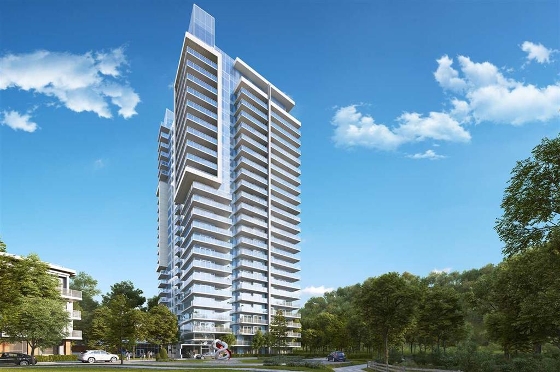
Now they have another reason. Award-winning Anthem presents Wynwood Green, a luxury high-rise community nestled between The Vancouver Golf Club and Brookmere Park in West Coquiltlam.  Featuring mid-century modern architecture by IBI Architects, the two elegant juxtaposed concrete towers include 379 one, two and three bedroom homes.


Wynwood Green’s first phase, a 23-storey tower, includes homes from 538 square feet ranging upto 1,299 square feet.  Each home features over-height ceilings, wide-plank flooring, Bosch integrated appliances and large, expansive windows overlooking extraordinary views.  Aspiring chefs will love the gourmet kitchens with quartz waterfall countertops, integrated pulls, full height porcelain backsplash, pull out pantry and open display cabinetry.


“We’re excited about the location of Wynwood Green. It’s not often we as developers get an opportunity to design a community adjacent to amenities like The Vancouver Golf Club, with direct access to the emerging North Road corridor with shops, services, restaurants, the SkyTrain, and the No. 1 Highway,” says Elva Kim, Vice President of Sales and Marketing at Anthem. “Each of the homes include large balconies to take advantage of the expansive views of the golf course, Burnaby and North Shore mountains, and the Vancouver skyline. The homes are designed to be timeless … classic with clean, modern lines.”


Wynwood Green residents will also enjoy exclusive access to the Wynwood Green Pavilion. The amenity building boasts an entertainment lounge, full kitchen, and a fitness centre with yoga studio and meditation centre.  Outside, a landscaped courtyard with seating and an indoor-outdoor fireplace and a grilling station will be perfect for those al fresco dinners on balmy nights.


When family or friends visit, Wynwood Green will include fully furnished guest.


Wynwood Green offers a peaceful, parklike setting in a thriving urban city. Kilometres of walking and biking trails are nearby in several provincial, regional and municipal parks like Pinecone-Burke Provincial Park, Colony Farm Regional Park, Mundy Park and many more.  Coquitlam has many sport and cultural amenities like the Place des Arts and the Poirier Sport and Leisure Complex.   Only a few minutes away, Lougheed Mall offers endless convenient amenities.


With the Evergreen Line five minutes from Wynwood Green, getting in and out of Coquitlam is easy - 40 minutes from downtown Vancouver and to the US border.


Founded 27 years ago, Anthem is a team of 350 people driven by creativity, passion and direct communication.   Anthem and Anthem United have invested in, developed or managed – alone or in partnership – more than 200 residential, commercial and retail projects with an aggregate value of more than $5 billion. “Our growing residential portfolio includes more than 11,000 homes that are complete, in design or currently under construction, from master planned mixed- use residential and multi- family, to townhome and single- family communities,” says Kim.


Whether you are a first-time buyer, moving up, or downsizing, you will be duly impressed by the attention to detail that Wynwood Green has to offer.  It is a rare opportunity to find a new home in a location this unique, built by a developer with a proven reputation for building quality homes with a passion for designing smart, thriving communities.


The presentation centre and display suite located at 1020 Austin Avenue, Coquitlam will open soon. To register or for more information on advanced priority access, email info@wynwoodgreen.ca or visit http://wynwoodgreen.ca/.


Provided by: REW - Real Estate Weekly

Read

The trend in housing starts was 226,777 units in December 2017, compared to 226,178 units in November 2017, according to Canada Mortgage and Housing Corporation (CMHC). This trend measure is a six-month moving average of the monthly seasonally adjusted annual rates (SAAR) of housing starts.


“Despite the variation in activity across the country, the national trend in housing starts held steady at its highest level since 2008,” said Bob Dugan, CMHC’s chief economist. “Apartment starts in urban centres were up 6.2% in 2017 compared to 2016.”

Monthly highlights

Victoria

Metro Victoria finished 2017 with historically high housing starts. Multi-family structures accounted for the majority of housing starts, with elevated rental market starts pushing the total starts to its highest level since 1976. December of 2017 reflected this trend, with a 70% increase in multi-family starts compared to the previous year. Metro Victoria’s housing market showed strong price growth and overheating throughout the year, giving builders and developers strong incentive to break ground on new projects.

Vancouver

Total housing starts in the Vancouver CMA increased in December 2017 compared to the previous month after posting one of the highest levels of monthly multi-family starts for the year. In particular, apartment condominium starts were elevated in Vancouver, Richmond and Coquitlam as low inventories on the resale market continue to encourage new development. Although total starts in 2017 were lower than 2016 due to constraints in construction labour and equipment, new home construction remained strong from a historical point-of-view due to continued demand for housing.

Calgary

The trend in total housing starts declined in December 2017 as the pace of single-detached and multiple construction decreased compared to the previous month. Despite the decline in the trend, total actual housing starts for 2017 were up 25% year-over-year. The housing market in Calgary has been recovering from the economic slowdown. Consumer confidence and labour market conditions have improved while the population continued to increase. This has helped support demand for new housing.

Winnipeg

In the Winnipeg CMA, the moderating trend in total starts observed over the last half of 2017 ended in December with both single-family and multi-family experiencing gains compared to the previous month. On a year-over-year basis, total actual housing starts more than doubled this December compared to December 2016 with the multi-family sector leading this increase, particularly new apartment projects. Single-detached starts also saw strong year-over-year growth. December rounds out the strongest year of new housing activity in Winnipeg since the late 1980s as recorded by CMHC. A background of stable employment, wage growth and last year’s record in-migration has supported the market. In addition, the introduction of an impact fee in Winnipeg contributed to an acceleration in housing starts in the city during the first half of 2017.

Belleville

Belleville builders started 104 homes in December, the highest number of starts in any given month since February 2009. Half of the total starts were rental apartments. These new rental units will contribute needed supply to the market, as the apartment vacancy rate in Belleville has been trending lower since 2013, falling to 2.2% in 2017. The total number of housing starts in 2017 was the highest since 1990, driven up by the rise in single-detached and apartment starts.

Greater Sudbury

There were 10 new homes started in the Greater Sudbury Census Metropolitan Area in December bringing the total number of new home starts in 2017 to 195; the lowest number of annual starts since 2001. The underwhelming year in starts was attributable to poor employment prospects faced by younger groups aged 15 to 44 and the resultant net out-migration from these groups. Competition from a balanced resale market was a further limitation to new home construction in 2017.

Ottawa

Total starts in the Ottawa CMA were at their highest level since 2009 for the month of December, driven mainly by purpose-built rental apartment starts. For the year, apartment starts were evenly split between purpose-built rentals and condominiums, and came in at more than double last years’ number. Just shy of 7,500 units, Ottawa total starts were at their highest level since 2002. Strong economic and demographic fundamentals boosted the demand in 2017, encouraging builders to increase construction activity.

Toronto

Overall, the pace of new home construction in the Toronto Census Metropolitan Area (CMA) remained virtually unchanged in 2017. Close to 39,000 homes broke ground this year, down 0.7% from 2016. Strong demand for new homes continued to be supported by improved employment conditions and strong migration. However, affordability challenges, tighter mortgage rules, increasing price gap with resale market alternatives, and a better-supplied resale market weighed on single-detached starts, which were down by 14% compared to 2016. Given escalating house prices, more homebuyers continued to shift their demand towards relatively more affordable housing options such as townhouses, and more affordable areas such as Brampton. Condominium apartment starts were down by 5% compared to 2016, nevertheless they continued to dominate new home construction thanks to strong demand from price-sensitive homebuyers and investors.

Québec CMA

Residential construction in the Québec area was strong in 2017. In all, 6,640 housing starts were recorded, for a gain of 39% over 2016. This hike was attributable to the start of several large apartment projects throughout the year. In particular, conventional rental housing construction maintained a historically high pace, with over 2,500 units started. As well, the seniors’ housing segment stood out with a record level of 1,334 new units. The strong labour market and the needs and preferences of older households seem to have stimulated demand for apartments in the area, but caution should be exercised as the rapidly rising supply could outpace this demand.

Montréal

The Montréal CMA ended the year with 24,756 housing starts — a high level compared to recent years. Of this number, some 19,400 were for apartments (rental and condominium), a level not seen since the end of the 1980s. This jump can be explained by several factors: the decrease in inventories of new and existing condominiums for sale on the market, urban densification, and the drop in the vacancy rate on the Montréal rental market.

Halifax

December housing starts trended higher in Halifax in both the single-detached and multiples markets. After slowing for three consecutive years, single-detached starts began to pick up pace in 2016 and continued on that upward trend throughout 2017, recording growth of 30% by year-end. Despite this uptick in single-detached construction, demand for rental accommodations supported by a declining vacancy rate continues to dominate the residential construction market in Halifax with over 2,000 multiples units breaking ground in 2017, up 16% compared to 2016.

Prince Edward Island (PEI)

Prince Edward Island’s strong construction season has extended well into December. Strong immigration over the past few years has fueled housing demand in the province of PEI, primarily in the Charlottetown area. This has helped to push single-detached starts up to their highest level since 2008. In all, starts were up 70% year-over-year in 2017.

CMHC uses the trend measure as a complement to the monthly SAAR of housing starts to account for considerable swings in monthly estimates and obtain a more complete picture of Canada’s housing market. In some situations analyzing only SAAR data can be misleading, as they are largely driven by the multi-unit segment of the market which can vary significantly from one month to the next.

The standalone monthly SAAR of housing starts for all areas in Canada was 216,980 units in December, down from 251,675 units in November. The SAAR of urban starts decreased by 15.1% in December to 198,132 units. Multiple urban starts decreased by 22% to 135,176 units in December. Single-detached urban starts increased by 4.7% to 62,956 units.

Rural starts were estimated at a seasonally adjusted annual rate of 18,848 units.


Preliminary Housing Starts data are also available in English and French through our website and through CMHC’s Housing Market Information Portal. Our analysts are also available to provide further insight into their respective markets.


As Canada’s authority on housing, CMHC contributes to the stability of the housing market and financial system, provides support for Canadians in housing need, and offers objective housing research and information to Canadian governments, consumers and the housing industry.

Read

There’s never a dull day in real estate. Last year started off with a big nervous question: Will the Canadian housing market crash? In 2018, the new year started off with more of a sigh. Analysts across North America came out with various pronouncements of deceleration in activity and pricing, but the overwhelming consensus was that the nation’s real estate landscape would flatten out, even in the hot Toronto and Vancouver markets.


It wasn’t too bold of a prediction. Activity was way down in the summer months of 2017, even as the number of listings was finally growing. This prompted only incremental increases in pricing and a nation-wide expectation of a soft-landing for Canada’s property markets. 


This flattening out of the market was happening well before the latest splash of cold water hit the fast-accelerating housing markets. That splash came in the form of amendments to mortgage regulations. Now lenders must qualify new borrowers —and those renewing or renegotiating with a new lender to qualify for a mortgage— using new guidelines. Borrowers are qualified now based on the posted rates, which are typically 200 basis points higher than discounted mortgage rates. These new regulations were announced in October and were officially implemented on January 1, 2018. 


What does all this mean for real estate markets in 2018? It means a possible return to the norm —a reemergence of a more boring, stable Canadian real estate market.


© Used with permission of / © Rogers Media Inc. 2018.


Source for above graphic: RBC Economics Monthly Housing Market Update, December 14, 2017


Canada’s real estate is actually balanced

According to Robert Hogue, senior economist with RBC Economics, there is “limited downside risks to prices in the near term in Canada” as the majority of housing markets, including Toronto, are “in balance.”

Based on the sales-to-new listings ratio—where 50% is a balanced market—the overall Canadian market appears to be balanced, according to RBC Economics December Monthly Housing Market report. Toronto and Calgary are also in balanced territory while Montreal and Vancouver are still leaning towards a seller’s market.

 
Another way to determine if Canada’s housing markets are levelling off is to examine months of inventory. The number of months of inventory represents how long it would take to liquidate current inventories at the current rate of sales activity. In November 2017, there were 4.8 months of inventory in Canada, down slightly from 4.9 months in October 2017 and the four months of inventory that was recorded in the summer months in 2017. Given that the long-term average is 5.2 months, analysts are predicting that most Canadian market segments are cooling off and returning to a more balanced market where supply meets demand.

Some markets still sizzle

Despite the incremental rise in interest rates in 2017 and the recent mortgage regulation changes—both factors that are expected to cool activity across Canada—some markets are still quite hot.


The Greater Golden Horseshoe area, which includes Toronto, had only 2.4 months of inventory at the end of December 2017. While this is much better than the all-time lows experienced in February and March 2017—when inventory dropped to just 0.8 months—it’s still below the region’s long-term average of 3.1 months.


A surge in deadline activity in Toronto accounted for most of the increase in the last few months of 2017, explains Hogue in his December economic report. “More stringent mortgage lending rules coming into effect in January no doubt prompted many buyers to advance their purchasing decisions.”


But this last-minute year-end activity in 2017 is not likely to continue into 2018. Hogue’s outlook for the New Year suggests that further moderation of home sales activity across Canada will cool any price increases in the upcoming year. “Near-term volatility will be followed by a generalized softening in 2018.”


The least optimistic outlook regarding Canada’s real estate markets in 2018 comes from the most unexpected place: The Canadian Real Estate Association. CREA, is the trade association that represents more than 100,000 real estate brokers, agents and salespeople across Canada. In December, CREA cut its home sales forecast for 2018. The association’s analysts cite the impact of tighter mortgage rules, the chill from the Toronto and Vancouver foreign buyers’ tax, as well as on-going affordability issues in the country’s biggest markets.


CREA predicts that activity (that is, the number of actual home sales) will fall 5.3% in 2018. This continued decrease in buying activity, combined with the 4% decline in activity in 2017, prompted CREA to anticipate a 1.4% drop in national average housing prices in 2018. The expected national average housing price for 2017 was $503,400.


If CREA’s prediction turns out to be true, 2018 will be the first year the national housing price will have fallen in Canada since the start of the global recession in 2008.


But the impact of a slowing market will not be felt uniformly across the country. According to CREA estimates sales activity will decline across Canada (by 5.3%), as a well as in B.C. (by 3.7%), in Alberta (by 2.8%), in Saskatchewan and Manitoba (3.8% and 3.9%, respectively) and in New Brunswick and Nova Scotia (by 0.5% and 2.8%, respectively). The two hardest hit provinces will be Ontario, with an almost 10% decline in activity (9.6%) and Prince Edward Island, with a 7.4% decrease in sales activity.


The only provinces predicted to have increased sales activity in 2018—albeit at anaemic rates—are Quebec (0.9%) and Newfoundland (1.3%).

What do these predictions mean for average home prices? Volatility. While Newfoundland is expected to have increased sales activity in 2018, its annual price change is expected to drop by 1.9% in 2018. Other provinces with price drop forecasts include Alberta (0.3%) and Ontario (2.2%). The prices in the remaining provinces will either flat-line—like in B.C. and Saskatchewan where 0% price appreciation is expected in 2018—or move up incrementally, like in Manitoba with a 1% average price increase, PEI (0.9%), Nova Scotia (2%) and New Brunswick (1.8%). Only Quebec average prices are expected to beat the national anaemic rates, with a 4.2% increase in average sales prices.


 What does this mean for buyers?

There are two strong headwinds when it comes to buying activity in 2018: Tighter mortgage lending rules and the threat of higher interest rates.


Because of tighter mortgage lending rules, buyers simply can’t afford to buy the same house as they would have in 2017. This could mean shaving anywhere from 5% to 25% off your maximum house-price budget—although consensus shows it will mean an 18% reduction in your maximum purchase price for one in six borrowers, who put down less than 20%.


One unintended consequence of this forced fiscal responsibility is that more buyers will end up competing for cheaper properties—possibly driving up the prices of condos and townhomes, properties previously considered more affordable.


This push for more affordable housing opportunities could be exasperated as potential buyers try to get into the market before mortgage rates rise. It’s expected that the Bank of Canada will continue with incremental increases to its overnight rate in 2018. While no one anticipates discounted mortgage rates to shoot up to 6%, the posted rates will hit this mark relatively quickly. The increase in mortgage rates will further erode a buyer’s possible house-buying budget, prompting more buyers to pull the trigger before being potentially locked out.


Based on all these factors, we shouldn’t be surprised by an active spring market, particularly in the condo and townhouse market segments.


As a buyer, you’d be wise to secure a mortgage pre-approval before shopping for a home. Don’t just do a quick, online calculation — talk to a mortgage broker. For those buyers struggling to get a loan, consider going through non-prime mortgage lenders. These alternative lenders specialize in buyers turned down by banks, as they allow for more non-traditional income and permit higher debt ratios (up to 50% total debt service ratio, versus the 42% guideline used by the banks). Another option is to increase the length of amortization on the mortgage, which lowers the debt service ratio used to qualify for the loan.


Just don’t expect to get all this help without paying for it. In the past, non-prime lenders have charged higher mortgage rates (to reflect the higher risk of the borrower). Going forward these non-prime lenders may opt to cut the rate but make up the lost revenue by tacking on a fee. The result: Higher risk buyers will end up paying more with fees for amortization periods longer than 25 years, as well as fees for holding less than 20% equity in the house and fees to get access to rates low enough to allow them to qualify for the mortgage.


What does this mean for sellers?

For sellers across Canada, it’s time to reset expectations. Gone are the days when you could expect to sell your home in a week or less (for more money than your neighbour, who only sold a month ago). Buyers are struggling to afford what’s out there and the result is a rise in inventory and a drop in sales activity.


In the last few years, a potential buyer ended up having to compete against other interests, such as investors, speculators and foreign buyers. Those in the market to make money have been pulling out—waiting for more certainty. That means fewer buyers in the market and fewer sales. The drop in sales activity will prompt price corrections and eventually, the market should stabilize in balanced territory. The investors and speculators may come back, at this point, but until then sellers need to readjust their expectations. The upside is that even a 10% to 15% drop in prices won’t reset a home’s value to pre-2016 price levels.


To stay competitive, consider scrutinizing current sales data for your street and neighbourhood. Walk through all open houses in your community, to get an idea of what homes look like before they sold (you can still get this sold data from your real estate agent). Finally, discuss with your real estate agent competitive pricing strategies.


What does this mean for current homeowners?

If you already own a home it’s time to do a little jig just don’t spend too long celebrating because it’s not all smooth sailing for current homeowners in 2018.


The biggest hurdle will be mortgage renewal. According to Bank of Canada analysis, half of all current mortgages will “reset” in 2018. What does this mean? It means 47% of mortgage holders will need to renew their mortgages; by 2021 another 31% of mortgages will need to renew and another 22% of that.


This surge of renewals will mean that these homeowners will have to make some tough decisions: Renew with your current lender and skip the mortgage stress test or shop around for a better rate and be subjected to the mortgage stress test.


For those homeowners who were proactive about paying off their mortgage debt and building up the equity in their home, this decision will be easy. You will qualify for a great rate whether you stay with your current lender or shop around.


But homeowners who refinanced and added more debt to their mortgage loans, or those that weren’t proactive about building up the equity in their home, may feel the pinch. Those that choose to stay with their current lender may find the rates are not as competitive, but may not have options elsewhere, as they’ll be subject to the new mortgage stress test.


Homeowners looking to obtain a Home Equity Line of Credit (HELOC) may be surprised at how much smaller this revolving loan will be in 2018. In 2017, anyone applying for a HELOC was stress-tested using the posted 4.89%. As of January 1, 2018, this rate increased to 5.7% (and will continue to increase as rate rise).


It’s worse if you’re a homeowner looking to refinance. Those looking to consolidate their debt through a refinance in 2018, may be surprised by the less than attractive mortgage rates offered to them, or the inability to qualify for the loan amount needed. Typically, those that need to refinance have debt ratios that are above average and this will be very problematic when trying to qualify under the new mortgage rules.


What does this mean for investors?

If you’re still in the market to buy a rental property, hats off to you. Many real estate investors were scared away in 2017, partly because of the crazy spring market and partly because of market uncertainty due to regulatory changes. But with markets rebalancing and prices starting to level off of slowly come down, many investors may get back into the market.


While single-family detached homes are still golden gooses, it’s hard for small landlords and large institutional investors to earn a profit on this building type. The purchase price is often too high to make rental numbers work, unless you can secure more than one rental in the home and this comes with its own costs and headaches.


For those investors choosing to skip the single-family home and look at condos and townhomes, keep in mind that competition may increase in these segments quite substantially in 2018. More first-time buyers may be pushed into this pricing segment and this would mean even more competition for these units.


Old rules of thumb remain, however. Try to find units that are well capitalized (lower purchase price, higher rental yield) and, where possible, look for neighbourhoods that support renters, such as urban centres, university and hospital communities as well as commercial complexes that offer newly built retail and office space.


Any investor thinking of buying in 2018, should first start with a financial plan and a budget. Then talk to your accountant and mortgage broker to make sure the numbers work. If all this checks out and you’re lucky enough to find a property, then 2018 may be the year for you to become a landlord (and the real work begins).


Provided by: Romana King with MSN Money

Read

Fabulous Outdoor Space

Spacious Layout

Price at $498,800

Open: Sat. Jan. 13 from 2 to 4pm.


Huge semi-private, West facing, outdoor patio with direct access to your suite; perfect for gardeners & pet owners alike. This 2bed/2bath/954sqft home shows very well.  Functional open concept layout with excellent room separation, you don’t want to miss this one! Features: freshly painted, cork flooring, SS apps w/gas stove, gas F/P & direct patio access. Huge master with ensuite, soaker & walk-in closet & a large 2nd bed complete this home. Located in The Harmony, a rental & pet friendly complex. Close to: transit, shopping, indoor/outdoor recreation & a host of perks available only to UniverCity residences. Do not miss your chance to enjoy living in this great lifestyle neighborhood! Act Now. OPEN HOUSE Sat. Jan. 13 from 2 to 4.

Read

VANCOUVER - An upward trend in housing prices isn't expected to significantly change in British Columbia despite an anticipated slowdown in sales this year, economists say.


The B.C. Real Estate Association's chief economist said Wednesday that new housing stock, slightly higher interest rates and tighter mortgage regulations will result in about a 10 per cent decline in sales compared with 2017.


But demand continues to outpace supply in most markets from Vancouver Island to the Okanagan, which spurs rising prices, Cameron Muir said.


"We would need a combination of a pretty substantial decline in demand as well as significant increases in overall residential supply in order to get to the point in which prices would decline," Muir said.


Nationally, the Canadian Real Estate Association has said tighter mortgage regulations imposed on Monday, including a stress test for uninsured mortgages, would result in fewer sales and reduced prices by about 1.4 per cent to an average selling price of $503,100 this year.


Bryan Yu, economist with Central 1 Credit Union, said the changes may slow the pace of first-time buyers entering the market or lead to adjustments in what people choose to buy.


While this may slow sales, particularly in the first quarter of this year, he said B.C.'s growing economy and jobs will maintain a strong demand.


"I think the overall economic drivers are still there to support rising prices through 2018," Yu said.


The Real Estate Board of Greater Vancouver said Wednesday the benchmark price for all residential properties was $1,050,300, in 2017, a 15.9 per cent jump from December 2016.

a sign in front of a building© Provided by thecanadianpress.com


Sales of detached homes, townhomes and apartments reached 35,993 last year, the third highest total in a decade.

The board considers the sales total more "historically normal," marking a 9.9 per cent decrease from 2016 and down 15 per cent from the sizzling pace of 2015.


A key aspect of last year's housing market was a decline in the number of available listings, a trend the board has said can put upward pressure on prices.


Board president Jill Oudill said 54,655 properties were listed for sale in 2017, a dip of 5.1 per cent from the year earlier.


She also said market activity across the Vancouver region differed considerably in 2017 based on property type.

"Competition was intense in the condominium and townhome markets, with multiple offer situations becoming commonplace," Oudill said in a news release.


The benchmark price of condominiums leaped 25.9 per cent in the Vancouver area last year, while townhomes increased 18.5 per cent and the price for detached homes climbed 7.9 per cent.


Prices have also soared in the neighbouring Fraser Valley with the benchmark price of condominiums jumping 40.5 per cent last year to $388,600.


The Fraser Valley Real Estate Association said the benchmark for single detached homes reaching $976,400, an increase of 14.2 per cent from 2016. The price of townhomes increased by 23 per cent.


Yu said rising prices means people will increasingly be left out of the housing market.


"We're going to see an increase in renters in proportion to the population," he said. "I think that's going to be the natural evolution of this market over time."


University of B.C. business professor Thomas Davidoff said governments could improve affordability by encouraging the development of more units in single-family home neighbourhoods and reforming taxes.


"We have high income and sales taxes and low property taxes and that says we encourage people not really to make a living and sell stuff here, but buy property. That's the worst recipe ever for affordability," he said.


Other factors, including political instability, interest rates or natural disasters, could drive down prices, Davidoff said. More likely, a major driver of prices will be what people are willing to pay.


"I do think in the long run, Vancouver will continue to be a very difficult place to buy or to rent unless you're really rich," he said. 


Provided by: Linda Givetash with the Canadian Press

Read
Reciprocity Logo The data relating to real estate on this website comes in part from the MLS® Reciprocity program of either the Greater Vancouver REALTORS® (GVR), the Fraser Valley Real Estate Board (FVREB) or the Chilliwack and District Real Estate Board (CADREB). Real estate listings held by participating real estate firms are marked with the MLS® logo and detailed information about the listing includes the name of the listing agent. This representation is based in whole or part on data generated by either the GVR, the FVREB or the CADREB which assumes no responsibility for its accuracy. The materials contained on this page may not be reproduced without the express written consent of either the GVR, the FVREB or the CADREB.