RSS

THANK YOU to all my Clients


Thank you to all my clients in 2018 that made this possible. #2 agent in the Royal LePage West Real Estate Services office consisting of 200+ realtors. Honoured to have been presented this award by Phil Soper President and CEO of Brookfield Real Estate Services owners of Royal LePage Canada.

Read

Just Sold: 212 22277 122 Ave., Maple Ridge, West Central

Fully Renovated

Huge 2nd Story Deck

Price at $374,800


click here for more...


Completely renovated. From the floors to the light fixtures; from the paint to the blinds; nothing to do but move right in! Shows well, you will not be disappointed. Located in The Gardens complex with a walk-score of 81. Close to: shopping, rec., transit, schools, parks & all types of amenities. This bright 2 bed, 2 bath, 1051sqft home features a spacious layout, laminate floors throughout, remodeled kitchen w/newer appliances, soft close cabinets, tons of cupboard/counter space, cozy gas F/P, newer W/D & a massive deck overlooking garden space; perfect for entertaining. The large master has 4pc ensuite & walk-in closet while the 2nd bed has a cheater ensuite. Bonus: 2 parking & locker. Act Now!

Read

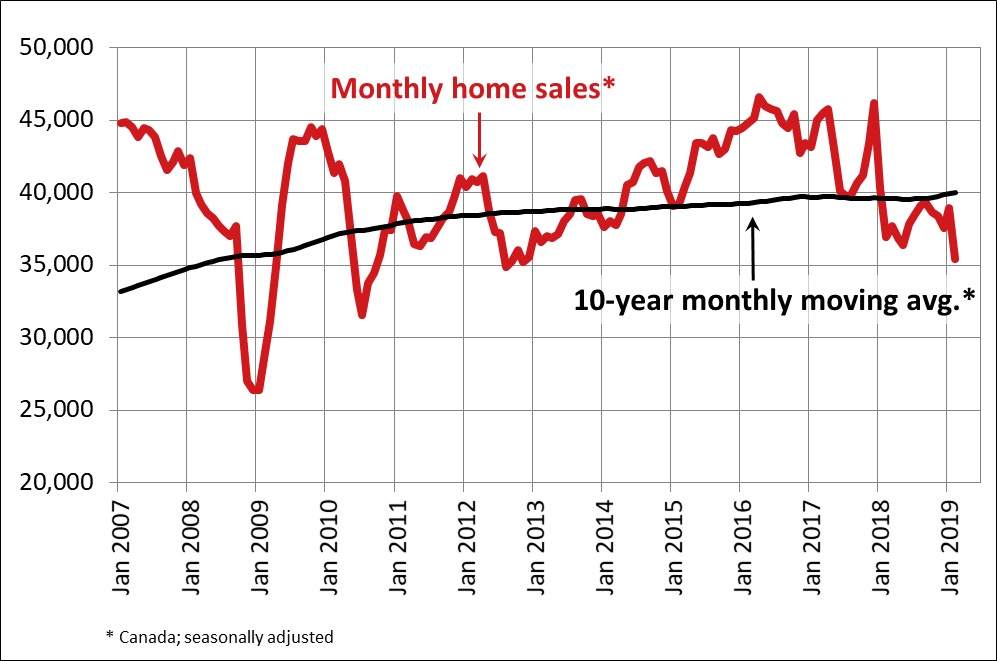
Canadian Housing Starts Trend Held Steady in January


The trend in housing starts was 208,131 units in January 2019, compared to 207,171 units in December 2018, according to Canada Mortgage and Housing Corporation (CMHC). This trend measure is a six-month moving average of the monthly seasonally adjusted annual rates (SAAR) of housing starts.


"After recent declines, the national trend in housing starts held steady in January and remained above historical average," said Bob Dugan, CMHC's chief economist. "While single-detached starts continued to trend lower in January, this was offset by an uptick in the trend for multi-unit dwellings in urban centres.

Monthly Highlights

Vancouver

The trend measure for housing starts in the Vancouver Census Metropolitan Area (CMA) held steady in January 2019 after trending lower in the second half of 2018. The majority of January’s starts were concentrated in the apartment condominium segment in the cities of Vancouver and Burnaby, which together accounted for over half of new construction activity for the month.

Kelowna

Total housing starts trended sharply upward in Kelowna for January. Condominium units in the city of Kelowna were the largest share of the uptick with larger projects breaking ground in the first month of 2019. This continued a trend of elevated multi-family construction in the region. However, single detached units also increased slightly.

Lethbridge

Total starts in Lethbridge trended higher in January 2019 compared to the previous month mainly due to the increase in single-detached starts. Multi-family starts declined marginally as the decrease in both row and apartment starts was partially offset by the increase in semi-detached starts.

Saskatoon

The trend measure of total housing starts edged higher in the first month of 2019. Nonetheless, actual total housing starts in January were down 15%, compared to January 2018. The reduction in building activity was entirely due to a sharp decline in multi-family construction while single-detached starts began the year on stronger footing.

Toronto

Toronto CMA total housing starts trend was unchanged from the previous month. Single and semi-detached homes along with condominium apartment starts trended lower. Row starts, conversely, trended significantly higher as strong pre-construction sales towards the latter part of 2018 converted into housing starts. Rising borrowing costs kept pre-construction sales of new homes low, particularly low-rise throughout 2018.  As a result, expect to see even fewer units breaking ground during 2019.

London

Total housing starts in London CMA trended higher due to increased apartment construction while single detached and rows homes starts continuing their downward trend. An increasing number of completed but unsold new single-detached homes resulted in fewer single-detached starts; as builders were able to satisfy demand from existing inventories.

Ottawa

Ottawa housing starts trended lower for all dwelling types in the first month of 2019. Starts this January marked the lowest for the month in over two decades. The number of units under construction in January was historically high, leaving homebuilders with fewer resources to commit to new construction.

Gatineau

In January 2019, housing starts trended lower for the second month in a row for the Gatineau area. However, the number of new rental housing units remains at a high level, as the aging of the population and the low vacancy rate continue to stimulate starts for this type.

Québec CMA

Housing starts activity started off slowly in the Québec CMA, as a result of a decrease in multi-unit segment. Despite this slowdown in January, multi-unit—especially rental—housing construction should stay relatively strong this year. Activity in this market segment is being stimulated in particular by migration and the aging of the population.

New Brunswick

In January 2019, New Brunswick’s total housing starts were 33% higher compared to a year ago. The increase was due to multiple-unit starts, which were more than double the number observed in January 2018. On the other hand, construction of single-detached housing has been on a downward trend and the number of starts in January was the lowest for the month in 20 years.


CMHC uses the trend measure as a complement to the monthly SAAR of housing starts to account for considerable swings in monthly estimates and obtain a more complete picture of Canada’s housing market. In some situations analyzing only SAAR data can be misleading, as they are largely driven by the multi-unit segment of the market which can vary significantly from one month to the next.


The standalone monthly SAAR of housing starts for all areas in Canada was 207,968 units in January, down from 213,630 units in December. The SAAR of urban starts decreased by 2.1% in January to 190,912 units. Multiple urban starts increased by 0.7% to 146,353 units in January while single-detached urban starts decreased by 10.4% to 44,559 units.


Rural starts were estimated at a seasonally adjusted annual rate of 17,056 units.


click here for more...


Provided by: CMHC

Read

Hafez is an absolutely amazing relator, who goes above and beyond. We have now bought and sold with Hafez. Hafez goes out of his way to ensure everything is in order and all questions/concerns are addressed (some of these questions we never even thought of). His knowledge is one of a kind!  After the sale and our purchase his contact doesn’t stop he sends friendly reminders on completing speculation tax and so on.  Hafez’s service is top notch!  I have referred him on to other family members who have all been beyond satisfied with his services!   If you are thinking of buying or selling I would strongly recommend Hafez for your needs, he goes above and beyond for his clients and isn’t just focused on the sale or the buy, his focus is on his clients happiness and security!   If I could give him a higher then 5 rating I most definitely would!  He’s a 10!


M. & D. R.

Read

Trio of tall towers proposed for Coquitlam city centre

Onni seeks to build 49, 45 and 25 storey buildings at Glen Drive and Pinetree Way

Another three towers could be added to the Coquitlam City Centre skyline.


Monday, council sent to public hearing a proposal by the Onni Group to build the highrises on the southeast corner of Pinetree Way and Glen Drive


Onni is proposing towers of 49, 45 and 25 storeys, comprising 891 units, including 186 rental units in the smallest tower. Ninety-five of the 705 market condos will be three-bedroom units while 31 of the 186 rental units will have three bedrooms.


(The report recommended requiring the rental tower be occupied prior to the market condominium towers.)


The developer also proposes 72,000 sq. ft. of commercial space on a six-storey podium on Glen Drive, with eight retail units, four floors of offices and a daycare space accommodating 80 to 100 children. It would be next door to a 40-storey tower being built by Polygon at Glen and Westwood Street that was approved last year. Council gave the go-ahead to that project despite several speakers at a public hearing complaining the area would become “a concrete jungle.”


Coun. Bonita Zarrillo was the only councillor to oppose Onni’s application going to a public hearing, expressing concern about the many buildings and lack of access to family housing.


“This is far too quick of a change,” said Zarrillo. “I don’t think this is the time to do this type of zoning given the lack of family and entry-level housing.”


The proposal calls for a $250,000 public art feature, two car-share vehicles, bike repair rooms, parking for 1,329 vehicles and 1,166 bicycles. A staff report said more design considerations have to be developed with Onni including a more distinct look to the podium.


Onni plans to install a micro district energy system fuelled by natural gas to provide heating, cooling and hot water. A city report estimated the system would reduce gas and electrical usage by five to 20% and greenhouse gases by 10 to 25%.


Mayor Richard Stewart said he wonders if the system would become more common with development proposals but city manager Pete Steblin said they work best when one owner owns it long-term, which Onni proposes to do, with regulation by the BC Utilities Commission. Steblin said not many developers are interested in the systems and many have objected to municipalities making them mandatory.


“We have wanted to encourage it but we didn’t want to get in the space of running it,” said Steblin, who added it’s not often a developer proposes to install the system.


The report said the development will generate an estimated $12 million in development cost charges and $31 million in density bonus funds, of which $2 million will go in the affordable housing reserve fund.


Provided by: Grant Granger for the Tri-City News

Photograph By CITY OF COQUITLAM 

Read

Home listings increase while buyers remain in holding pattern

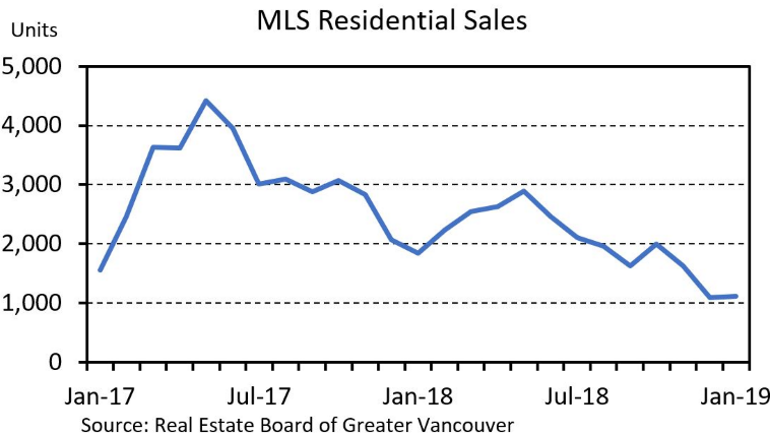
Home listings continue to increase across all housing categories in the Metro Vancouver* housing market while home buyer activity remains below historical averages.


The Real Estate Board of Greater Vancouver (REBGV) reports that residential home sales in the region totalled 1,103 in January 2019, a 39.3 per cent decrease from the 1,818 sales recorded in January 2018, and a 2.9 per cent increase from the 1,072 homes sold in December 2018.


Last month’s sales were 36.3 per cent below the 10-year January sales average and were the lowest January-sales total since 2009.


“REALTORS® are seeing more traffic at open houses compared to recent months, however, buyers are choosing to remain in a holding pattern for the time being,” Phil Moore, REBGV president said.


There were 4,848 detached, attached and apartment homes newly listed for sale on the Multiple Listing Service® (MLS®) in Metro Vancouver in January 2019. This represents a 27.7 per cent increase compared to the 3,796 homes listed in January 2018 and a 244.6 per cent increase compared to the 1,407 homes listed in December 2018.


The total number of homes currently listed for sale on the MLS® system in Metro Vancouver is 10,808, a 55.6 per cent increase compared to January 2018 (6,947) and a 5.2 per cent increase compared to December 2018 (10,275).


For all property types, the sales-to-active listings ratio for January 2019 is 10.2 per cent. By property type, the ratio is 6.8 per cent for detached homes, 11.9 per cent for townhomes, and 13.6 per cent for condominiums.


Generally, analysts say that downward pressure on home prices occurs when the ratio dips below the 12 per cent mark for a sustained period, while home prices often experience upward pressure when it surpasses 20 per cent over several months.


“Home prices have edged down across all home types in the region over the last seven months,” Moore said.


The MLS® Home Price Index composite benchmark price for all residential homes in Metro Vancouver is currently $1,019,600. This represents a 4.5 per cent decrease over January 2018, and a 7.2 per cent decrease over the past six months.


“Economic fundamentals underpinning our market for home buyers and sellers remain strong. Today’s market conditions are largely the result of the mortgage stress test that the federal government imposed at the beginning of last year,” Moore said. “This measure, coupled with an increase in mortgage rates, took away as much as 25 per cent of purchasing power from many home buyers trying to enter the market.”


Sales of detached homes in January 2019 reached 339, a 30.4 per cent decrease from the 487 detached sales recorded in January 2018. The benchmark price for detached homes is $1,453,400. This represents a 9.1 per cent decrease from January 2018, and an 8.3 per cent decrease over the past six months.


Sales of apartment homes reached 559 in January 2019, a 44.8 per cent decrease compared to the 1,012 sales in January 2018. The benchmark price of an apartment property is $658,600. This represents a 1.7 per cent decrease from January 2018, and a 6.6 per cent decrease over the past six months.


Attached home sales in January 2019 totalled 205, a 35.7 per cent decrease compared to the 319 sales in January 2018. The benchmark price of an attached unit is $800,600. This represents a 0.5 per cent decrease from January 2018, and a 6.2 per cent decrease over the past six months.


Click here for more...


Provided by: REBGV

Read

Hafez helped me close the deal on my new home quickly and seemingly effortlessly. I expected the process to be more stressful based on my previous experience of working with other agents -- but I was pleasantly surprised at how easy it turned out to be!


S.S.

Read

Vancouver council to vote on looking at increase to Empty Homes Tax


Under the EHT's current form, nearly 5,400 of the more than 7,900 homes deemed "vacant" were able to make use of exemptions to the tax.


Vancouver Mayor Kennedy Stewart is taking what could be the first steps toward his campaign promise of tripling the city's Empty Homes Tax (EHT).


In September, Stewart unveiled the promise to hike the tax rate to three per cent as one of the key planks in his housing platform.


Vancouver's EHT currently applies a one per cent tax on the assessed value of homes deemed to be vacant for more than six months per year, barring specific exceptions.


Stewart is now bringing a motion to council asking city staff to dig into the practicalities and possible repercussions of increasing the tax.


The motion calls on staff to develop a plan by March that would "review and improve the fairness and effectiveness of the Empty Homes Tax in achieving the objective of returning empty and underutilized properties to the market."

In doing so, it asks staff to "review the fairness and effectiveness of exemptions and definitions, considering as well the Provincial Speculation Tax definitions."


Under the EHT's current form, nearly 5,400 of the more than 7,900 homes deemed "vacant" were able to make use of exemptions to the tax.


Stewart's motion also asks staff to develop a proposed timeline for information on the impact of increasing the tax rate, along with possible program benefits and drawbacks.


Finally, it calls for recommendations on how to consult the public and conduct further internal analysis.


In November, the City of Vancouver said that in its first year, the EHT was expected to bring in about $38 million, $8 million above its initial estimate.


The tax is meant to encourage homeowners to rent out vacant properties, thus increasing the stock of available rental.


Last fall, the Canada Mortgage and Housing Corporation's (CMHC) 2018 rental market report for the city found the city's vacancy rate had declined from 0.9 per cent to 0.8 per cent year-over-year.


That same report found the average rent for a two-bedroom apartment had climbed in one year from $1,860 to $1,964.


Stewart's motion goes to council on Tuesday.


Provided by: Simon Little for MSN Money

Read

Thank You

Big thank you to all my clients that have placed their trust in me to assist them with their real estate needs. Proud to be part of the Real Estate Board of Greater Vancouver's Medallion Presidents Club. Representing the top 1% of Greater Vancouver Realtors.

Read

Just Sold: 1004 Rochester Ave., Coquitlam, Maillardville


BEAUTIFUL original owner home features gorgeous SOUTHERLY VIEWS w/ a bright & spacious open floorplan w/ lots of natural light! Updated kitchen w/ s/s appliances, undermount sinks, tile backsplash, pot lighting, plus lots of cabinets / storage space. Adjacent family room w/ cozy gas F/P & eating area w/ access out to large glass covered deck, perfect for entertaining or relaxing while enjoying the view! Large living room w/ 2nd F/P & dining area. Upstairs w/ 3 ample sized bedrooms, Master w/ 4 pc ensuite, walk-in closet + views of the river! Bonus A/C! Lower level w/ garage and large crawlspace–for extra storage. Fantastic central location! Close to shops & services of Austin Ave, all levels of schools, parks. Quick access to Hwy 1 & Lougheed.


Listing offered by: ReMax All Points Realty

Read

Just Listed: 212 22277 122 Ave., Maple Ridge, West Central

Fully Renovate

Huge 2nd Story Deck

Price at $374,800


click here for more....


Completely renovated. From the floors to the light fixtures; from the paint to the blinds; nothing to do but move right in! Shows well, you will not be disappointed. Located in The Gardens complex with a walk-score of 81. Close to: shopping, rec., transit, schools, parks & all types of amenities. This bright 2 bed, 2 bath, 1051sqft home features a spacious layout, laminate floors throughout, remodeled kitchen w/newer appliances, soft close cabinets, tons of cupboard/counter space, cozy gas F/P, newer W/D & a massive deck overlooking garden space; perfect for entertaining. The large master has 4pc ensuite & walk-in closet while the 2nd bed has a cheater ensuite. Bonus: 2 parking & locker. Act Now! OPEN Jan 26 2 to 4pm.

Read

BC Home Sales Decline 25% in 2018

The British Columbia Real Estate Association (BCREA) reports that a total of 78,345 residential unit sales were recorded by the Multiple Listing Service® (MLS®) in 2018, a decline of 24.5 per cent from the 103,758 units sold in 2017. The annual average MLS® residential price in BC was $712,508, an increase of 0.4 per cent from $709,601 recorded the previous year. Total sales dollar volume was $55.8 billion, a 24.2 per cent decline from 2017.


“BC home sales fell below the 10-year average of 84,800 units in 2018,” said Cameron Muir, BCREA Chief Economist. “The sharp decline in affordability caused by the B20 mortgage stress test is largely to blame for decline in consumer demand last year.”


A total of 3,497 MLS® residential unit sales were recorded across the province in December, down 39.1 per cent from December 2017. The average MLS® residential price in BC was $695,647, a decline of 5.2 per cent from December 2017. Total sales dollar volume was $2.4 billion, a 42.3 per cent decline during the same period. 


Total active residential listings were up 33.3 per cent to 27,615 units in December, the highest December inventory since 2014 when 33,995 active residential listings were recorded.


click here for more...


Provided by: BCREA

Read
Reciprocity Logo The data relating to real estate on this website comes in part from the MLS® Reciprocity program of either the Greater Vancouver REALTORS® (GVR), the Fraser Valley Real Estate Board (FVREB) or the Chilliwack and District Real Estate Board (CADREB). Real estate listings held by participating real estate firms are marked with the MLS® logo and detailed information about the listing includes the name of the listing agent. This representation is based in whole or part on data generated by either the GVR, the FVREB or the CADREB which assumes no responsibility for its accuracy. The materials contained on this page may not be reproduced without the express written consent of either the GVR, the FVREB or the CADREB.